For Singaporean homeowners and HDB dwellers, managing access for family members, domestic helpers, or trusted visitors presents a common challenge. The simple act of handing over a key can become a logistical puzzle. A wall-mounted key lock box emerges as a brilliantly straightforward solution, merging physical security with effortless convenience. This definitive guide explores the world of key lock boxes, offering a detailed examination of their types, the critical process of selection, and the importance of professional drilling, mounting, and installation within the unique context of Singapore’s urban housing.
With some similarities to a wall-mounted key rack, a key lock box is a durable, weather-resistant safe specifically designed to hold one or more keys securely. Mounted on an external wall, gate, or within a sheltered common area, it grants controlled access to a property without the need for physical key exchange. Users gain entry by inputting a code, turning a combination dial, or using a digital keypad. This system proves invaluable for granting temporary access to cleaners, dog walkers, or maintenance personnel, serving as a secure spare key repository for family members who may arrive home at different times, and providing emergency access for trusted neighbors in case of unforeseen situations.

Digital Locks vs. Wall-Mounted Key Lock Boxes: Choosing Your Access Solution
While both systems manage property access, they serve distinct purposes and often work best in tandem. A digital door lock replaces the entire traditional locking mechanism, offering keyless entry via PIN codes, fingerprints, or smartphone apps. It is a permanent, integrated security upgrade for the main door, suitable for daily use by all household members.
A wall mounted key box, however, is an accessory designed for key management. Its primary function is to store and provide access to physical keys. It is the ideal solution for scenarios where a digital lock may not be feasible or desired, such as providing access to a padlocked gate, a storage room, or a car key. It also acts as a perfect backup for a digital lock system; should the electronic lock fail or its batteries die, the physical key remains secure and accessible in the external box. For many, the combination of a digital main lock and a sturdy external key box represents the most comprehensive access strategy.
Navigating HDB Regulations for External Mounting
Installing any fixture on the exterior of an HDB block requires careful adherence to guidelines set by the Housing & Development Board. These rules exist to maintain the aesthetic uniformity of the estate, ensure structural safety, and prevent obstruction of common areas. Mounting a box on a main entrance door or on the external wall of your unit may be subject to specific restrictions. It is generally more permissible to install the box within the private space of your own yard or on a grille gate before your main door, provided it does not obstruct common corridors or pathways.
Professional installers possess a working knowledge of these guidelines and can advise on the most compliant and secure location for your wall mount key lock box. They understand the importance of avoiding structural elements and concealed utilities within walls, ensuring the installation does not compromise the building’s integrity or violate any HDB regulations.
A Buyer's Guide to Key Lock Box Types
Selecting the right unit involves balancing security needs with practical functionality. The two predominant systems are combination and digital.
A combination key lock box wall mount model operates through a mechanical dialing system. Users rotate a dial to specific numbers in a sequence to unlock the box. These units require no batteries, offering reliability in all weather conditions. They are generally more affordable but can be susceptible to manipulation if a low-quality model is chosen or if the combination is observed.
A digital key lock box wall mount version features an electronic keypad. Access is granted by entering a predetermined PIN code. These models often provide enhanced security features, such as the ability to program multiple unique codes for different users and change these codes frequently with ease. Some advanced versions even offer audit trails, logging the time and date of each access. Their main drawback is the dependence on batteries, which require periodic replacement.
When searching for the best wall mounted key lock box, prioritize units constructed from heavy-gauge steel or solid metal with a hardened shackle. Look for weatherproof ratings (IP65 or higher) to withstand Singapore’s tropical rains and humidity. The internal size should comfortably accommodate the keys you need to store, potentially with room for a small access card or fob.
Strategic Positioning for Security and Convenience
The location of your key box is a critical decision that influences both its security and utility. The ideal spot is visible enough for authorized users to find it easily but discreet enough to avoid drawing unnecessary attention from passersby. It should be installed in a well-lit area to allow for easy code entry during evening hours.
Mount the box at a height that is comfortable for the primary users but difficult for young children to reach or tamper with. Consider the sightlines from the street; positioning it around a corner or slightly recessed can provide an extra layer of discretion. Most importantly, ensure the mounting surface is solid and unwavering. A concrete wall or a sturdy metal gate, for example, offers far more security than a hollow wooden door.
A Step-by-Step Guide to Secure Installation
A flimsy installation renders even the most secure box useless. So, follow these steps for a rock-solid mount.
| Step | Details |
|---|---|
| Step 1: Select the Optimal Location | Choose a sturdy mounting surface on a concrete wall or metal gate. Use a stud finder if mounting on an external wall to locate the solidest point. Avoid areas near electrical wiring or plumbing. |
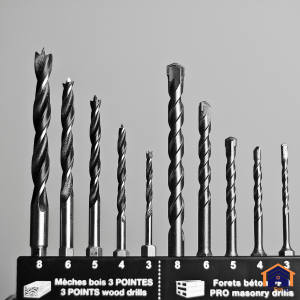
| Step 2: Mark and Pre-Drill Holes | Hold the mounting bracket or the box itself firmly against the wall. Use a spirit level to ensure it is perfectly straight. Mark the drilling points with a pencil. Using a power drill fitted with a masonry bit (for concrete) or a metal bit (for gates), drill pilot holes at each mark. |
| Step 3: Install Heavy-Duty Anchors | For concrete walls, insert high-quality sleeve anchors or concrete screws into the pilot holes. For metal gates, self-tapping metal screws may be sufficient if the gate’s material is thick enough. Always ensure anchors are rated for outdoor or high-stress use. |
| Step 4: Secure the Mounting Bracket | Align the bracket with the holes and drive the screws or bolts through the bracket and into the wall. Use a wrench or screwdriver to tighten them until the bracket is immovable. Avoid over-tightening to prevent stripping. |
| Step 5: Attach the Lock Box | If your model uses a separate bracket, hang the lock box onto it and engage any secondary locking mechanisms (e.g., anti-lift pins) to prevent the entire box from being lifted off. |
| Step 6: Final Security Check | Attempt to wiggle and pull the installed box. It should feel completely solid, with no movement whatsoever. Test the locking mechanism several times to ensure it functions correctly. For outdoor installations, ensure the box is weather-sealed and protected from direct rain exposure. |
Need a secure, damage-free lock box installation in your HDB flat or on a gate? FixFirst’s certified handymen use professional-grade tools and HDB-compliant techniques to ensure your lock box is tamper-proof and stable
Why Choose a FixFirst Handyman To Install Your Key Lock Box Wall Mount
The security of your home should never rest on a DIY guess. A poorly installed key box becomes a vulnerability rather than a safeguard. A FixFirst handyman delivers certainty and expertise. We bring an essential understanding of HDB exterior walls and common gate materials, enabling us to select the perfect location that is both compliant and maximally secure.
Our technicians arrive equipped with a professional-grade drilling and mounting toolkit, including high-torque drills, diamond-tipped masonry bits, and a comprehensive selection of the highest-grade anchors and fasteners designed to resist pulling, prying, and weathering. We measure with precision, ensuring your box is level and mounted with an unwavering grip that deters tampering. We ensure the installation protects your property’s surface and provides a level of security that you can absolutely depend on. Choosing FixFirst is an investment in the integrity of your home’s first line of defense.

Frequently Asked Questions (FAQs) - Wall Mounted Key Lock Box Singapore
High-quality models are IP65 rated or higher, meaning they are dust-tight and protected against water jets, making them suitable for Singapore’s climate.
Models constructed from solid steel with a shrouded shackle and a digital keypad that allows for frequent code changes are generally considered the most secure.
This may violate HDB guidelines if it protrudes into the common corridor. It is always better to mount it on the gate within your own private property boundary or on a nearby wall that is part of your unit’s exterior.
For optimal security, change the code after each use by a temporary guest. For family members, establish a routine of changing the code every few months.
Most digital boxes have a low battery warning. It is the user’s responsibility to replace the batteries promptly. Many also have a backup keyhole that can be opened with a physical key in case of total battery failure.
Cheap, low-quality boxes can be vulnerable to picking or decoding. Investing in a high-security model from a reputable brand significantly reduces this risk.
Sizes vary, but most standard boxes can hold 2-5 standard keys. Larger models are available for storing multiple sets or larger items like key fobs.
Yes, it is an excellent solution for granting access to guests. Just be sure to change the code thoroughly between each guest’s stay.
Mechanical combination models require occasional lubrication of the dial mechanism. Digital models require periodic battery changes. Both should be visually inspected for signs of wear or tampering.
Most mechanical combination boxes have a default reset procedure outlined in the manual, often involving a reset tool. Digital boxes may have a master code or a physical backup key for recovery.
A wall mounted key box is a simple yet powerful tool that enhances home security and simplifies daily life. Selecting a high-quality model and ensuring its installation is executed with precision and strength are the two pillars of its effectiveness. For a solution that provides unwavering security and eliminates the risks of a faulty setup, professional key lock box wall mounting and installation is not just a recommendation but a necessity. Contact FixFirst today to schedule your installation. Let our experts provide you with a secure, compliant, and perfectly installed key lock box, delivering peace of mind and effortless access for years to come.