Aircon Gas Top Up
An air conditioner cools a room essentially through the compressor, which circulates the refrigerant in the air conditioning system and re-pressurizes it back into liquid after it gets vaporized. The heat-exchange process between the warm indoor air flowing around the refrigerant pipes results in the vaporization of the refrigerant. Cooling is not possible without the refrigerant and the compressor circulating it in the air conditioner. Also, barring any leaks in the chiller pipes, an air conditioning unit loses roughly around 10 percent of its refrigerant every year. This is why it is highly recommended that an aircon gas top up be done once every two years as part of a scheduled aircon general servicing appointment.
What Are the Usual Signs that Indicate Low Refrigerant Levels
If your air conditioning unit looks like it is running smoothly but is unable to blow cool air, consider calling in an HVAC professional for a coolant gas refill. Another sign that might indicate low refrigerant gas level is water leaks from the aircon. A water leak could mean that refrigerant vaporization is no longer happening properly because not enough refrigerant is present in the chiller pipes. Ice forming on the air conditioner’s evaporator coils, which can result in corrosion and internal damage, also points to insufficient coolant gas circulating in the air conditioning system. For more aircon maintenance tips, especially for HDB aircon users, the HDB has these recommendations.
What Does an Aircon Gas Top-Up Service Entail?
If you feel like you can DIY an AC gas refill, please reconsider and just call in professional help. Any inappropriate gas pressure release such as quickly evacuating the refrigerant gas could destroy the compressor, the most expensive part of the air conditioner. Basically, this is how aircon service professionals do this complex procedure.
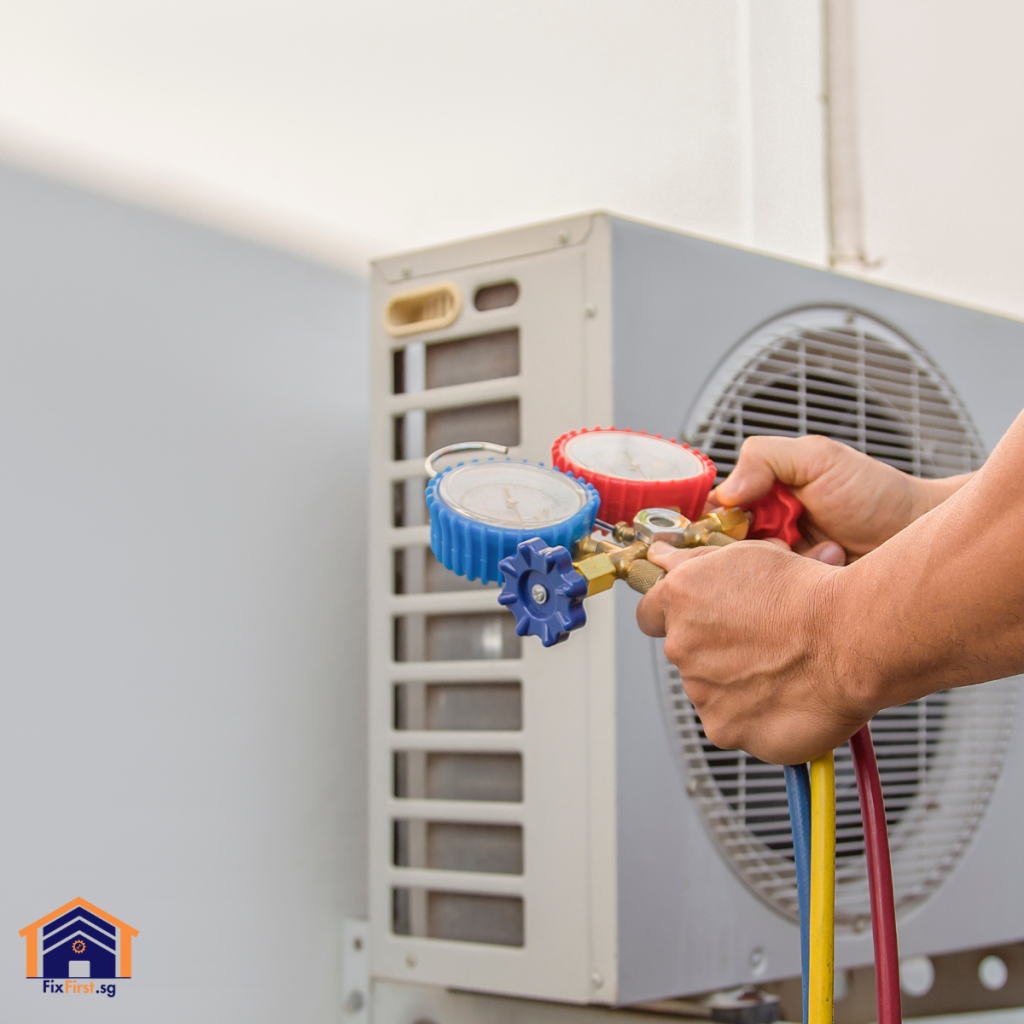
Using proper tools and safety gear, a service technician locates the suction and discharge lines. The suction line is where the refrigerant refill should go. The bolt that secures the suction line is unscrewed. This has to be done by a trained AC service technician because the screw functions as a valve to control the flow of refrigerant.
Run the vacuum pump to get air out of the system and moisture from the compressor.
Close the manifold gauge valves of the air conditioner. Connect the corresponding hose to the refrigerant tank and loosen the end of the hose at the manifold gauge valve side. Open the refrigerant tank. Open and close gradually and repeatedly to exhaust the air from the pipes.
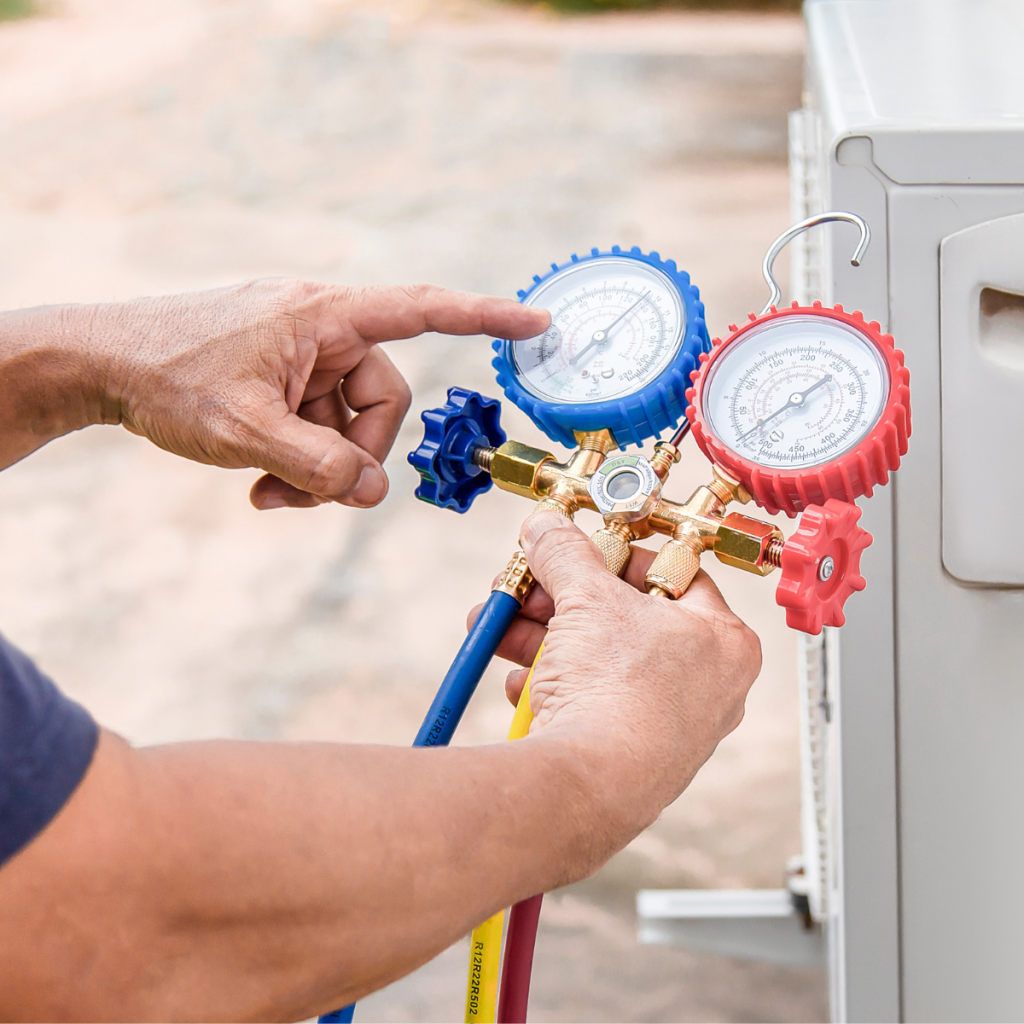
Open and then close the low side knob of the manifold gauge valve. Wait for three to four seconds before turning on the air conditioner. Wait until the compressor starts working before reopening the low side knob of the manifold gauge valve. Keep it open for four seconds, then close it again for two seconds. Continue this gradual refilling step until the pressure in the gauge reads 60-70 psi. Never release all the gas at once, or you end up destroying the compressor.
Once 60-70 psi is reached, close the manifold valve and the knob on the refrigerant tank. Unscrew the hose from the suction line.
What Are the Three Main Types of Refrigerant Gas?
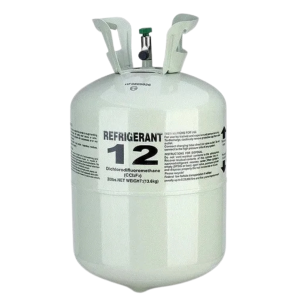
R12
R12 is a chlorofluorocarbon that is notorious for its ozone-depletion properties. The use of this refrigerant type has already been discontinued in the 1990s.
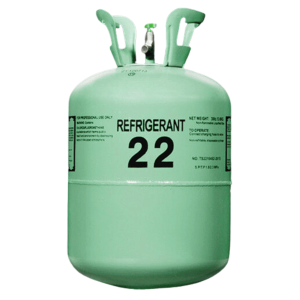
R22 or Freon
Freon is one of the most commonly used refrigerants for air conditioners and refrigerators. Also slowly being phased out in some places, freon has been linked to environmental damage and ozone-layer depletion.
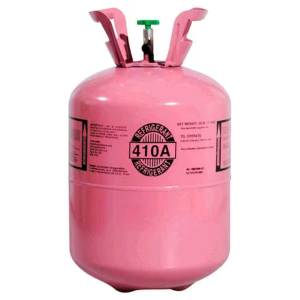
R410A or Puron
Puron refrigerant gas, although relatively expensive, is known for its environmental friendliness. It also delivers way more efficient cooling than air conditioning systems designed to run on freon. If you are looking to upgrade to a puron-based air conditioning system, look up aircons rated as 5 ticks by the NEA and get a professional firm to carry out the aircon installation.
Aircon Gas Top-Up Prices
The following table summarizes the different refrigerant gas types used in Singapore as well as FixFirst service rates.
| Gas Type | Service Cost |
|---|---|
| R22 Gas | $50 to $60 |
| R22 Gas + Chemical Overhaul | $15 additional |
| R410A Gas | $80 to $120 |
| R410A Gas + Chemical Overhaul | $40 additional |
Need to top up your aircon gas? FixFirst’s certified technicians provide fast, reliable re-gassing services for all common refrigerants. We always check for leaks before refilling and recommend a chemical overhaul for older units to ensure long-term performance. Our pricing is upfront and includes labor—no hidden fees. For best results, service your aircon every 3–6 months, especially in Singapore’s humid climate.
The Risks of DIY Aircon Gas Top-Up: Leave It to the Professionals
Attempting a DIY aircon gas top-up is not only ineffective but also hazardous. Modern air conditioners use refrigerant gas that operates within a sealed, pressurized system. The issue of low cooling is rarely as simple as “low gas.” It is almost always a symptom of a larger problem, such as a leak or a component failure. Simply adding gas without professional leak detection and repair is a temporary fix that will fail rapidly, wasting your money and allowing the underlying fault to worsen. More critically, refrigerants are hazardous chemicals that require specialized equipment and training to handle safely. Improper handling can lead to severe frostbite from direct contact, the risk of dangerous pressure explosions, and the illegal release of gases that are harmful to the environment.
Your safety, the integrity of your expensive aircon unit, and regulatory compliance are important. A licensed technician from FixFirst does far more than just add gas; they perform a comprehensive diagnosis to find and fix the root cause, ensure the system is charged to the manufacturer’s exact specifications, and conduct safety checks for optimal performance and efficiency. Protect your investment and your well-being. Schedule a professional diagnosis and precision gas servicing with our certified experts today.
Frequently Asked Questions (FAQs) – Aircon Gas Top-Up
An aircon gas top-up is the process of refilling or replenishing the refrigerant (commonly referred to as “gas”) in your air conditioning system. The refrigerant is essential for the cooling process, as it absorbs heat from the indoor air and releases it outside.
Common signs that your aircon may need a gas top-up include:
- Weak or reduced cooling performance. The aircon blows air but doesn’t cool the room effectively.
- Longer cooling times. The aircon takes longer than usual to reach the desired temperature.
- Ice buildup on the evaporator coil. This indicates insufficient refrigerant levels.
- Hissing or bubbling sounds. These noises may signal a refrigerant leak.
- Higher electricity bills. Low refrigerant levels cause the aircon to work harder, increasing energy consumption.
If you notice any of these signs, contact us for a professional inspection.
Under normal circumstances, your aircon should not require frequent gas top-ups. Refrigerant is not consumed during operation; it circulates in a closed system. But if your aircon is losing gas, it usually indicates a leak that needs to be repaired. Regular maintenance can help detect and fix leaks early.
The cost of a gas top-up depends on the type of refrigerant used (e.g., R22, R410A, R32), the size and capacity of your aircon system, and the extent of the leak and any additional repairs required. Contact us for a detailed quote based on your specific needs.
No, aircon gas top-up requires specialized tools, equipment, and technical expertise. Handling refrigerants without proper training can be dangerous and may damage your aircon system. It’s best to leave this task to licensed professionals like FixFirst.
A gas top-up typically takes 1-2 hours, depending on the size of the system and the extent of the leak. If a leak is detected, additional time may be required for repairs.
Not always. Poor cooling can be caused by various issues, such as dirty filters, clogged coils, or a faulty compressor. Our technicians will diagnose the problem and recommend a gas top-up only if low refrigerant levels are the cause.
Running an aircon with low refrigerant levels can lead to:
- Reduced cooling performance. The aircon will struggle to cool your space.
- Increased energy consumption. The system works harder, leading to higher electricity bills.
- Damage to components. Low refrigerant levels can cause the compressor to overheat and fail.
Complete system breakdown. Prolonged use with low gas can result in costly repairs or replacement.
Yes, our technicians always check for refrigerant leaks before performing a gas top-up. Simply adding gas without fixing the leak is a temporary solution and will lead to recurring issues. We use advanced tools to detect and repair leaks effectively.
Water leakage is usually caused by clogged drainage pipes or dirty evaporator coils, not low refrigerant levels. However, our technicians will inspect your aircon during the gas top-up service and address any additional issues.
Yes, we service aircon units from all major brands, including Daikin, Midea, Mitsubishi, Panasonic, LG, Toshiba, Europace, and more. Whether you have a split unit, window unit, ceiling cassette, or centralized system, our technicians are equipped to handle it.
Yes, we cater to both residential and commercial clients. Whether you need a gas top-up for your home aircon or a large-scale commercial system, our team has the expertise to handle it.
To ensure a smooth process, please clear the area around your indoor and outdoor units. Then provide access to power outlets and water points. Inform us of any specific issues or concerns with your aircon.
Yes, we stand by the quality of our work. Our gas top-up services come with a warranty that covers any issues arising from the service. Specific terms and duration will be provided during the appointment.
Booking is easy! You can call or Whatsapp us at 89107700 or email us at admin@fixfirst.sg. Our team will get in touch to schedule a consultation and provide a free quote
Yes, restoring the correct refrigerant levels ensures your aircon operates efficiently, reducing energy consumption and lowering electricity bills.
If our technicians identify any issues during the gas top-up, we’ll provide a detailed report and recommend the necessary repairs. You can choose to proceed with the repairs immediately or schedule them for a later date.
Yes, we offer affordable maintenance packages for customers who require regular servicing, including gas top-ups. These packages are designed to save you time and money while ensuring your aircon remains in top condition.
To minimize the risk of gas leaks, schedule regular maintenance to detect and fix leaks early. Avoid DIY repairs or tampering with the refrigerant system, as well. And keep the outdoor unit clean and free from debris.
We provide gas top-up services across all areas of Singapore. Contact us to confirm availability in your location.
Yes, we service aircon units of all ages and models. However, if your unit is too old or frequently requires repairs, we may recommend upgrading to a newer, more energy-efficient model.
Yes, if the cooling issue is caused by low refrigerant levels, a gas top-up will restore your aircon’s cooling performance. However, our technicians will diagnose the problem to ensure the correct solution is applied.
If you have additional questions or need further assistance, don’t hesitate to contact us. At FixFirst, we’re committed to providing reliable and professional aircon gas top-up services to keep your system running at its best!