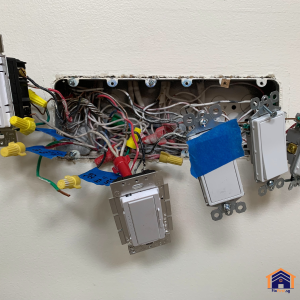
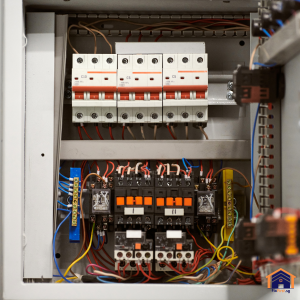
Few elements in a building demand the same level of precision, safety awareness, and forward-thinking as electrical wiring. In Singapore, where high-density living and modern power consumption patterns place constant demand on electrical systems, the difference between a properly installed circuit and a compromised one often comes down to experience. Electrical wiring installation forms the backbone of any functional space, yet its complexity is frequently underestimated until a fault appears. At FixFirst, we treat wiring as the foundational investment it truly is: a system that must balance current load requirements, future scalability, and strict adherence to Singapore’s safety regulations.

Why Electrical Wiring Demands a Specialist in Singapore9888888880-
Singapore’s electrical standards, governed by the Energy Market Authority (EMA) and the Singapore Standards (SS) codes, leave no room for guesswork. A certified electrician, on top of connecting wires, interpret load calculations, select the correct cable sizing, and ensure that every termination point meets the required fire safety and earthing protocols. When you search for electrical wiring installation Singapore, you are looking for someone to run cables through walls as well as seeking a professional who understands how the tropical climate affects insulation durability, how HDB regulations differ from private property requirements, and how modern appliances draw higher starting currents than older wiring systems can safely handle.
The consequences of substandard wiring extend beyond flickering lights or tripped breakers. Overloaded circuits generate heat, which over time degrades insulation and increases fire risk. Poorly terminated connections create arcing, a leading cause of electrical fires in residential settings. In commercial environments, unreliable wiring disrupts operations and compromises sensitive equipment. FixFirst approaches every wiring project with the understanding that safety, longevity, and performance are non-negotiable outcomes.
The Core Components of a Safe Electrical Wiring System
A well-executed electrical wiring installation in Singapore consists of several interdependent components. Each element must function correctly not in isolation, but as part of a unified system.
Conductors and cable types form the physical pathway for electricity. In Singapore residences, copper conductors remain the standard due to their excellent conductivity and resistance to corrosion. The choice between solid-core and stranded wires depends on the application: solid-core wires suit fixed installations inside conduits, while stranded wires offer flexibility for connections that may require movement. Insulation materials must withstand ambient temperatures and humidity levels common in Singapore’s environment. Our electricians select cables rated for the specific load and environmental conditions of each project, whether for a new condominium unit or a landed property renovation.
Circuit breakers and distribution boards serve as the control center and protective barrier for the entire system. Every circuit must be properly sized to its breaker, ensuring that overloads trip before wires overheat. Residual Current Circuit Breakers (RCCBs) add an essential layer of protection by detecting leakage currents that could indicate a shock hazard. FixFirst technicians verify that distribution boards are clearly labeled, properly segregated, and equipped with the correct protection devices for each circuit type, including dedicated circuits for air-conditioning units, water heaters, and kitchen appliances.
Earthing systems provide a safe path for fault currents, directing them away from users and equipment. Singapore regulations require a properly installed earth bar and consistent continuity throughout the installation. Without effective earthing, metal casings of appliances can become energized during a fault, creating a lethal touch hazard. Our installations always include thorough earth continuity testing to confirm that the system will perform as intended under fault conditions.
Conduits and trunking protect wiring from physical damage and allow for future modifications. Concealed conduits within walls or ceilings keep wiring out of sight while maintaining accessibility for maintenance. Surface trunking offers a practical solution for additions in completed spaces where chasing walls is not feasible. We use materials rated for fire resistance and durability, ensuring that the protective pathways do not become a hazard themselves.
A Step-by-Step Guide to Professional Electrical Wiring Installation
When FixFirst undertakes an electrical wiring installation Singapore project, we follow a structured process that prioritizes accuracy, safety, and minimal disruption to your daily routine.
| Step | Details |
|---|---|
| Step 1: Site assessment and load analysis | We review your current and anticipated electrical usage, identify high-demand appliances, and calculate the total load to determine whether the existing incoming supply is adequate or requires an upgrade. This phase also involves identifying optimal routes for new wiring, considering structural elements, and noting any constraints such as HDB regulations or building management requirements. |
| Step 2: Detailed planning and compliance check | We prepare or refer to a wiring diagram that specifies circuit allocations, cable sizes, protective device ratings, and earthing arrangements. This plan undergoes a compliance review against the latest SS 638 (formerly CP5) code of practice for electrical installations. For HDB flats, we ensure all proposed work aligns with the Housing Board’s renovation guidelines, including the use of licensed contractors and proper submission procedures where required. |
| Step 3: Preparation and protective measures | The work area is prepared with dust sheets and protective barriers. Where existing wiring is present, we isolate circuits to ensure a safe working environment. We identify and label existing circuits to prevent accidental disconnection of essential equipment. |
| Step 4: Installation of conduits and trunking | We install conduits or trunking according to the planned routing. For concealed work, we chase walls with precision tools to minimize dust and structural impact. Surface trunking is cut and fitted with clean corners and properly secured fixings. All conduit joints are properly aligned to prevent future issues when pulling wires. |
| Step 5: Cable pulling and termination | Cables are pulled through conduits using methods that avoid damaging the insulation. We maintain correct bending radii and avoid over-stressing the cables. At termination points, wires are stripped to the correct length, and connections are tightened to manufacturer specifications. Loose connections are a common source of failure in electrical work; our technicians verify torque on terminal screws and ensure secure fittings at every point. |
| Step 6: Distribution board work | New circuits are connected to the distribution board with proper labeling. We install or upgrade protective devices as needed, ensuring coordination between breakers and the wiring they protect. Neutral and earth bars are checked for correct termination, and any unused knockouts are sealed to maintain the board’s integrity. |
| Step 7: Testing and commissioning | The completed installation undergoes a series of tests: continuity of protective conductors, insulation resistance, polarity checks, and earth fault loop impedance measurement. These tests confirm that the wiring will operate safely under normal conditions and that protective devices will operate correctly during faults. |
| Step 8: Final walkthrough and user guidance | We review the completed work with you, explaining the layout of circuits, the location of isolation points, and any operational considerations. |
Need a full electrical rewiring or circuit upgrade? FixFirst’s EMA-licensed electricians provide safe, compliant, and professional services across all HDB flats and private homes in Singapore. From load analysis to final testing, we do it right. Book your consultation today.
Signs Your Home or Office Requires Electrical Rewiring
Not every property needs a full rewiring, but certain indicators suggest that the existing electrical wiring Singapore installation has reached the end of its safe service life. Recognizing these signs early allows you to address risks before they escalate.
Frequent circuit breaker trips without an obvious cause often indicate that the wiring is unable to handle the connected load or that insulation degradation is causing leakage currents. Flickering or dimming lights when appliances start up points to voltage drop issues, which in severe cases can damage equipment. Discolored or warm-to-touch outlets and switch plates signal overheating at connection points, a condition that warrants immediate investigation.
Properties with wiring that have not been updated in over 30 years likely have older insulation materials that become brittle with time, increasing the risk of short circuits. Homes still using fuse boxes instead of circuit breakers lack modern protection features. If your renovation plans involve adding significant new loads—such as multiple air-conditioning units, an induction cooktop, or a home office setup—an assessment of the existing wiring capacity is essential before proceeding.
Why FixFirst Leads in Electrical Wiring Installation Singapore
FixFirst has built its reputation on consistency, technical accuracy, and a commitment to doing the job correctly the first time. Our electricians hold the necessary licensing and maintain current knowledge of Singapore’s electrical codes. We do not rely on shortcuts or temporary fixes; every connection, every cable route, and every protective device is selected and installed with long-term reliability in mind.
We also recognize that electrical work in occupied spaces requires consideration for your daily activities. Our teams coordinate with you to schedule work during times that minimize disruption, and we maintain clean work practices throughout the project. Dust extraction tools, careful material handling, and thorough cleanup after each day’s work are standard parts of our approach.
Conclusion
Electrical wiring is not a component to compromise on. It is the infrastructure that powers your home, protects your family, and supports your business operations. When done correctly, a wiring installation provides decades of reliable service with minimal intervention. When done poorly, it introduces hidden risks that can surface at the worst possible moments. FixFirst approaches every electrical wiring installation Singapore project with the diligence and technical rigor that this essential work demands. If you are planning a renovation, adding new circuits, or simply want peace of mind that your existing wiring is safe, reach out to our team. We provide clear assessments, detailed proposals, and the quality of work that stands up to time and Singapore’s demanding standards. Contact FixFirst today to schedule a consultation and take the first step toward a safer, more capable electrical system.
Frequently Asked Questions (FAQs) about Electrical Wiring Installation Singapore
We provide complete wiring solutions including new building/full-house wiring, re-wiring for older homes (to replace aluminium or aging copper wires), addition of power points, lighting circuits, and dedicated lines for air conditioners, ovens, or water heaters. We also set up wiring for offices, retail shops, and warehouses, as well as install data and trunking wiring (alongside electrical).
Typical full re-wiring for a 4-room HDB (including replacing all concealed wiring, switches, and sockets) takes 2 to 4 days, depending on accessibility and whether trunking or concealed re-wiring is needed. Adding a few extra points can often be completed within 4–6 hours. We provide a clear timeline before starting any job.
For HDB flats and condos, concealed re-wiring usually involves chasing walls to run new PVC conduits. However, we can often minimise damage by using existing conduit paths or switching to surface trunking (weatherproof and paintable) where allowed. We’ll advise the most practical and aesthetic option during the site survey.
Costs vary based on property type, number of points, concealed vs surface wiring, and material quality. As a rough guide:
- Adding 1 power point: $80–$150
- Re-wiring a 3-room HDB (full): $1,800 – $2,500
- Re-wiring a 5-room HDB: $2,500 – $3,500
- Private landed property: from $4,000
We offer free itemised quotes with no hidden fees.
For partial work (adding a few points), you can stay at home since we isolate only the working circuits. For full re-wiring, it is advisable to vacate for 1–2 days because power to the whole unit will be cut intermittently. We’ll work with you to schedule conveniently and minimise disruption.
For a light switch, the wiring involves connecting the live (brown) wire from the circuit breaker to one terminal of the switch and the switched live wire going to the light to the other terminal, while the neutral (blue) wire bypasses the switch and goes directly to the light. The earth (green/yellow) wire must be connected to the switch’s earth terminal. Always turn off the main power and verify with a voltage tester before touching any wires, and if unsure, hire a licensed electrician.
For recessed lighting, you typically run a 1.5mm² or 2.5mm² cable from the switch to the first recessed light’s junction box, then daisy-chain from one light to the next by connecting live to live, neutral to neutral, and earth to earth inside each junction box. Ensure all connections are secure with wire connectors and that the recessed lights are rated for the ceiling type and properly spaced for even illumination.
To extend light fixture wiring, first cut the power and strip about 12mm of insulation from the existing wires and the new extension wire of the same gauge. Join the wires by colour—brown to brown, blue to blue, and green/yellow to green/yellow—using inline wire connectors or terminal blocks, then wrap with electrical tape for safety. Tuck the extended wires back into the junction box and ensure no bare copper is exposed.
To install a ceiling light fixture with existing wiring, turn off the power, remove the old fixture, and mount the new fixture’s bracket to the ceiling electrical box. Connect the fixture’s wires to the house wires: brown (live) to brown, blue (neutral) to blue, and green/yellow (earth) to earth using wire nuts or terminal connectors. Secure the fixture to the bracket, restore power, and test the light
To install a ceiling light without existing wiring, you have a few options: use a plug-in fixture with a cord that runs to a nearby wall outlet (hiding the cord with cable covers), install a battery‑operated LED light that mounts with screws or adhesive, or choose a wireless light controlled by a remote. For a permanent solution, you would need to run new wiring from the distribution board, which legally requires a licensed electrician in Singapore.