Open-plan living and compact layouts define most HDB flats, and that openness creates risk when you have young children or pets. A doorway without a door, a kitchen entrance that stays permanently open, or a short flight of stairs inside a maisonette all invite accidents. A wall mounted barrier blocks these danger zones at their source. Unlike a pressure-fitted gate that can topple when a child leans on it, a properly anchored wall mounted barrier stays rigid and reliable.
A fall down even two steps in a split-level flat can result in a hospital visit. A toddler wandering into the kitchen while you cook faces hot surfaces, sharp corners, and cleaning chemicals stored at low levels. A wall mounted barrier gives you a fixed checkpoint that an adult can operate with one hand, while a curious child cannot defeat it. In pet-owning households, the same barrier keeps a dog from bolting out the main door or chewing cables behind the television console.

Types of Wall Mounted Barriers for HDB Layouts
The common swing gate barrier attaches to the wall on one side with hinges and latches onto a receiver bracket on the opposite wall. It works best in corridors or doorways where you want a permanent, walk-through opening that closes securely. Choose a model with a double-locking latch that a small child cannot figure out, and check that the gate swings both ways if the traffic pattern demands it. Avoid gates with a bottom bar that sits at shin height, because that bar becomes a tripping hazard for adults in a narrow corridor.
Retractable barrier gates roll sideways into a compact cassette that sits against the wall when not in use. They suit open-plan areas where a swing gate would block movement. The mesh or fabric curtain pulls across the opening and hooks into a catch on the opposite wall. When you retract the gate, nothing protrudes into the walkway. This style also works on angled or uneven openings where a rigid gate would never close neatly.
For the top of a staircase, never install a pressure-mounted gate. Only a hardware-mounted wall mounted barrier that screws into the wall meets the safety requirement. A fall at the top of stairs can cause serious injury, and a gate that gives way under pressure fails exactly when you need it most.
Mounting a Wall Mounted Barrier on Concrete and Drywall
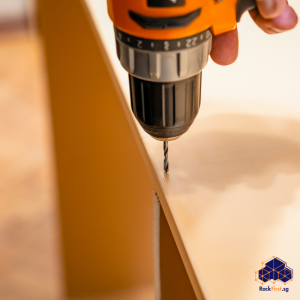
HDB structural walls consist of dense concrete. You need a hammer drill, a 6 mm or 8 mm masonry bit, and high-quality nylon wall plugs. Drill straight and deep enough that the plug sits fully inside the concrete, not just the plaster skim coat. Blow the dust out of the hole before inserting the plug. Use the screws supplied with the gate, because generic wood screws often snap under the repeated load of a gate swinging open and shut several times a day.
Many HDB flats also have gypsum board partitions between rooms. A standard wall plug cannot hold in hollow board. For a wall mounted barrier on drywall, you must locate a stud or use toggling anchors. A metal toggle bolt spreads the load behind the board and holds a gate bracket firmly. If the stud spacing does not match the gate width, secure a mounting plate or a wooden strip across the studs first, then attach the gate brackets to that plate. This distributes the force and prevents the screws from pulling a clean hole through the gypsum.
Rental-Safe and Non-Drilling Options
Renters who cannot drill holes into the wall still need a safe barrier. Some manufacturers offer adhesive mounting kits specifically for their gate brackets. These kits use a large, thick adhesive pad that bonds to a smooth, clean wall surface. On a glazed tile or a mirror-smooth painted wall, the bond can hold a light to medium gate. Clean the wall with isopropyl alcohol, press the bracket on, and leave it untouched for a full day before hanging the gate. Test the hold by pushing and pulling before you trust it with a child.
Adhesive mounts work poorly on textured or matte paint, and almost never on wallpaper. In those cases, a pressure-mounted barrier placed in a doorway with a solid wooden frame can work for temporary use, but you must check the tension every few days because temperature and humidity changes in Singapore’s climate relax the pressure pads. Remember the iron rule: never use a pressure gate at the top of stairs, ever.
If you absolutely must drill, a single pair of 6 mm holes fills and paints over cleanly at the end of a tenancy. A handyman can match the existing wall colour and leave no trace, often in under an hour.
When To Call a Professional
A wall mounted barrier at the top of stairs deserves a professional check. The wall material, the gate hardware, and the daily stress cycles must all align. An experienced handyman scans for hidden conduits, selects the correct anchors for your specific wall type, and tests the finished installation with a deliberate hard shove. For rental flats, a professional also documents the condition before mounting and offers a patch-and-paint removal service when you move out.
Keep Your Family Safe with a Gate That Stays Put
A wall mounted barrier that you screw into solid structure gives you years of peace of mind. It stays where you put it, opens with a smooth motion, and stands up to the roughest daily use. At FixFirst, we install safety gates in HDB flats every week. We know which walls need toggle anchors, which need masonry plugs, and which need a little creative mounting plate work. Contact us today to get your barrier fitted correctly, and make your home a safer place for everyone who lives in it.