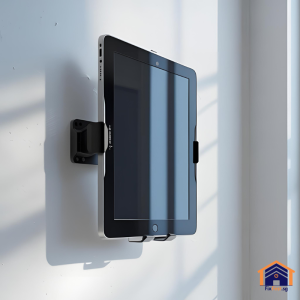
A television mounted on a drywall partition can look just as clean as one bolted into concrete. The difference sits entirely in the fasteners you choose. If you walk into a hardware shop and grab a packet of generic green wall plugs, you are gambling with an expensive screen. Drywall, known locally as plasterboard or gypsum board, has no structural core. It cannot grip standard plugs. A proper TV wall mount drywall anchors strategy keeps the screen on the wall and the wallboard intact.

Where Drywall Shows Up in Singapore Homes
Builders use drywall in specific parts of an HDB flat or private condominium. The partition that encloses the study area, the half-wall between the kitchen and the living room, the false wall built to recess a television, and some bedroom feature walls are all likely to be plasterboard over timber or metal studs. Newer loft-style units and renovated resale flats often contain large drywall surfaces that homeowners mistake for masonry. Tapping the surface reveals the truth: a hollow echo rather than a solid thud. If you plan to hang a 43-inch or 55-inch screen on that wall, you must base every decision on TV wall mount drywall anchors, not on assumptions rooted in brick and mortar.
Why Generic Plugs Destroy Your Wall
A standard plastic wall plug works by expanding against the sides of a solid drilled hole. When you push one into drywall, the crumbly gypsum core makes the hole bigger under load. Soon the plug starts spinning, the screw loosens, and the bracket develops a forward lean. The television might stay up for weeks or months, but a slight knock or the daily pull of HDMI cables eventually tears the plug clean out. What remains is a ragged crater and, often, a cracked board. Fixing a ripped-out drywall patch costs more than the television mount itself. The right TV wall mount drywall anchors distribute the weight across a much larger surface behind the board, stopping this failure from ever starting.
The Two Types of TV Wall Mount Drywall Anchors That Actually Work
Toggle bolts and snap toggles sit at the top of the list for heavy loads. A traditional butterfly toggle uses a spring-loaded metal wing that folds flat, passes through a pre-drilled hole, then springs open inside the wall cavity. When you tighten the machine screw, the wings pull against the back of the drywall over an area two or three times wider than a plastic plug. Snap toggles, which are the modern standard, operate in the same way but use a solid metal channel that holds the wings in place even if you remove the bolt. This feature helps when you need to take the bracket off for painting without losing the anchor inside the wall.
For lighter televisions under 15 kg, a heavy-duty metal self-drilling anchor with deep threads can work, but only on boards 12.5 mm thick or greater. Always pair the anchor with the exact screw diameter specified on the packaging, and check that your bracket uses bolt holes wide enough to accept that screw. When a job calls for a full-motion articulating mount, the leverage multiplies the effective load. In those cases, skip the screw-in anchors altogether and go straight to snap toggles that bite into metal studs. A full-motion TV wall mount drywall anchors setup often requires hitting the vertical metal studs hidden inside the partition, which demands a stud finder that detects both wood and metal, a tool any decent Singapore handyman arrives with.
Step-by-Step: Installing TV Wall Mount Drywall Anchors Without Blowing Out the Board
- Mark the bracket position and scan the wall with a stud finder. If you locate a metal stud exactly where you need a mounting point, you will drill into the stud itself using fine-thread metal screws. If no stud aligns, proceed with toggles.
- Weigh your television with its attached accessories. Confirm that each toggle you plan to use is rated for at least four times the load. Four snap toggles on a 55-inch screen give you a safety margin that makes a tear-out nearly impossible.
- Drill the hole for the toggle using the diameter printed on the packet. A too-small hole crushes the gypsum; a too-large one prevents the wings from biting properly. Drill straight through with a sharp twist bit, not a masonry bit, and let the bit do the cutting while you hold the drill steady.
- Insert the snap toggle or fold the metal wings and push the bolt through. Pull back gently until you feel firm resistance, then hold the plastic collar or metal channel in place while you tighten. Stop tightening the moment the bracket plate sits flat against the wall. Overtightening crushes the board and reduces the anchor’s grip.
- Secure all four mounting points, hang the television onto the bracket, and engage the safety locking screws. Give the mount a gentle tug downward and sideways before releasing the screen. Movement at this stage means an anchor didn’t seat properly, and you should address it immediately.
The Electrical Side of a Drywall TV Wall Mount
Drywall partitions create a cavity that tempts some homeowners to drop power cables straight down the hollow space. Singapore’s electrical regulations do not permit flexible appliance cords inside wall cavities. The correct method is still a licensed electrician installing a fixed 13A outlet directly behind the television, drawing a new line from an existing circuit and encasing all wiring in proper trunking or conduit inside the cavity. The same snap toggles that hold the bracket can also secure a recessed socket box to the plasterboard, giving you a flush finish that hides every wire. FixFirst crews handle the mounting, the TV wall mount drywall anchors, and the concealed power point in a single trip because splitting those jobs across different contractors lengthens the disruption and leaves gaps in accountability.
When Drywall Anchors Shine and When They Need Help
A drywall anchor is a clever piece of hardware, but it has limits that no installation should ignore. If a partition flexes when you press on it, the board itself is too thin for heavy loads, and you should sister the mounting points to the studs with a plywood backing board that spans two vertical studs. Likewise, if the plasterboard shows signs of damp, such as swollen edges or flaking paint, the core has lost its structural integrity. No TV wall mount drywall anchors can compensate for a board that turns to powder under pressure. In that situation, repair the drywall section first or relocate the mount to a concrete wall elsewhere in the room.
A television mounted on a hollow wall should feel as solid as one on brick when the anchors match the load and the board is sound. Choosing the right fasteners eliminates the quiet anxiety that comes from watching a screen wobble every time someone walks past. FixFirst has seen enough botched plasterboard jobs to know that the hardware matters as much as the technique. When we install a television on drywall, we use as much as possible toggle bolts rated far beyond the screen weight, scan for studs, and leave you with a mount that stays put for years. If you would rather not spend your weekend drilling exploratory holes and guessing fastener sizes, call FixFirst or book online. We will mount your television, help you ick the right TV wall mount drywall anchors, and handle every cable, so the only thing you see on that wall is the show you want to watch.