Transforming a spare room or corner of your HDB flat into a personal fitness zone requires smart, space-saving solutions. For boxing and MMA enthusiasts, a free-standing punching bag stand often consumes too much precious floor space. This reality makes a punching bag wall mount Singapore homeowners can install an incredibly attractive option. This definitive guide explores the critical aspects of selecting, buying, and installing a wall-mounted punching bag system, ensuring your home gym is both effective and secure.
A wall-mounted system–such as the boxing bag wall mount or boxing wall mount bag–offers a permanent and space-efficient answer to your training needs. By elevating the bag off the floor and anchoring it directly to a solid wall structure, you reclaim valuable square footage for other activities. This setup provides a consistent and stable target for striking, unlike free-standing bags that can shift or tip. The installation creates a dedicated athletic area, turning an underutilized wall into a dynamic center for improving your technique, power, and cardiovascular endurance without compromising your living area’s functionality.

Understanding Punching Bag Wall Mount Types and Components
Choosing the right support system is the foundation of a safe and satisfying training experience. The market offers several mounting solutions, each with distinct characteristics.
The Standard Punching Bag Wall Mount Bracket
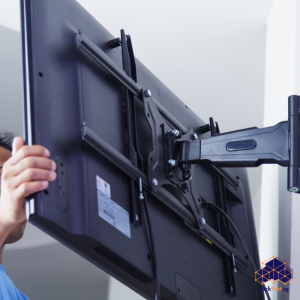
This is the most common and straightforward solution. It typically consists of a heavy-gauge steel plate that fixes flush against the wall and a swinging arm or extension that holds the bag. A quality punching bag wall mount bracket will include a robust swivel mechanism, which allows the bag to rotate naturally upon impact, reducing strain on the mount and providing a more realistic rebound. This design is excellent for most heavy bags and is relatively minimalist in its profile.
Heavy-Duty Cage and Plate Systems
For those seeking maximum stability, especially for heavier bags or intense training, a cage system offers superior support. These units feature a larger steel plate that distributes the load across a wider area of the wall, often with multiple anchor points. They may include additional bracing that extends vertically or horizontally, creating a triangulated structure that absorbs and disperses the immense forces generated during workouts. This is the preferred choice for serious athletes.
The Specialized Wall Mounted Punching Target
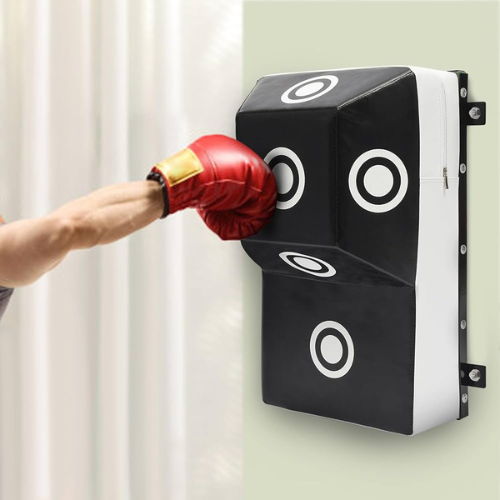
Beyond the traditional heavy bag, some trainers prefer alternatives like mounted aqua bags or double-end bags. These require specific mounting hardware. A wall mounted punching target for a double-end bag, for instance, would involve two anchors: one on the wall and another on the ceiling or floor, with elastic cords creating tension. This guide focuses on single-point wall mounts for standard bags or even wall mounted boxing pads, but it is important to recognize that different training tools demand their own specific hardware.

Selecting the Right Punching Bag for Your Wall Mount
The mount itself is only half of the equation; selecting a compatible bag is equally important. Bags come in various fills, covers, and weights, each suited to different training goals.
Bag Weight and Fill Material
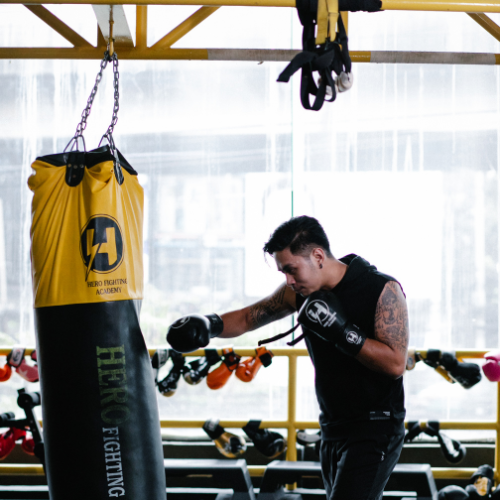
The bag’s weight must match the capacity of your chosen punching bag wall mount. Lighter bags (70-100 lbs) are suitable for speed and technique work, while heavier bags (100-150 lbs) are for building power and strength. Common fills include shredded fabric, sand, or a composite mix, each affecting the bag’s firmness and impact feel. Water-filled aqua bags offer a unique sensation but are extremely heavy when full.
Bag Cover and Attachment Style
The outer cover material, whether synthetic leather, genuine leather, or vinyl, affects durability and feel. Crucially, you must check the bag’s attachment loop. Ensure it is strongly reinforced and compatible with the hook or carabiner on your wall mount. A failure at this connection point is a common safety hazard.
HDBs have a relatively compact floor plan, so some residents install a hook on the ceiling for storing their unused punching bag, which they then only mount each time they train. Overall, this gives HDB residents more flexibility with their limited space.
Considerations for Noise and Vibration
In a shared HDB environment, the thud of strikes and the transmission of vibration through walls are significant concerns. Some bags are specifically designed with noise-dampening technology. Furthermore, investing in a mount with a spring or shock-absorbing mechanism can greatly reduce the transfer of force and sound into the building’s structure, making your training sessions more considerate to neighbors.
The Critical Installation Process: Positioning and Mounting
A successful installation hinges on two pillars: perfect positioning and mechanically secure fastening. Rushing this process risks property damage and personal injury.
| Step | Details |
|---|---|
| Step 1: Identifying the Ideal Location | Select a wall that is structurally sound, typically a reinforced concrete or brick wall in your HDB. Avoid partition walls or areas with suspected electrical wiring or plumbing behind them. Ensure there is ample clearance in all directions—at least a meter or more from the wall—so you can move around the bag freely and practice angles and footwork without obstruction. Also, consider the ceiling height to avoid accidentally touching it during kicks. |
| Step 2: The Nonnegotiable Need for Solid Mounting | The immense dynamic forces from punching and kicking create a tremendous pulling and levering effect on the mount and wall. Standard wall plugs and screws will fail catastrophically. You must use high-tensile steel bolts paired with mechanical expansion anchors or chemical anchors specifically rated for heavy dynamic loads in concrete. The HDB provides guidelines for renovations, and while mounting fitness equipment is generally acceptable, the method must be professional and secure. |
| Step 3: Executing the Installation | The process involves carefully marking the drilling points from the mount’s template, using a spirit level to ensure perfect alignment. Drilling into concrete requires a powerful rotary hammer drill with a carbide-tipped bit of the exact specified diameter. After drilling, you must clean the holes thoroughly before inserting the anchors. Tightening the bolts to the correct torque specification is the final step in ensuring the mount will not loosen over time from the constant vibration. |
Want a safe, damage-free punching bag installation in your HDB flat? FixFirst’s certified handymen use professional-grade tools and HDB-compliant techniques to ensure maximum safety and durability
Why Choose a FixFirst Handyman To Install Your Punching Bag Wall Mount
The decision to install a heavy-duty punching bag mount is a significant one, with safety as the paramount concern. The forces involved are not comparable to hanging a picture or a shelf; they are orders of magnitude greater. This is not a DIY project for the casual handyperson. Engaging a FixFirst handyman service provides a layer of assurance that is simply unavailable otherwise. Our technicians possess not just the tools, but the critical knowledge of Singapore’s building standards and HDB construction specifics.
We arrive equipped with industrial-grade rotary hammer drills and torque wrenches, alongside a selection of high-load anchors certified for dynamic applications. We know how to identify the optimal, load-bearing wall points and how to avoid the hidden network of rebar and conduits within your walls. Our expertise ensures the mounting plate is perfectly level and every bolt is tensioned to exacting specifications, creating an installation that is not just secure today but remains so after thousands of powerful impacts. By choosing FixFirst to install your punching bag wall mount, you are investing in the integrity of your home and the safety of everyone in it, allowing you to focus entirely on your training without a second thought.

Frequently Asked Questions (FAQs) - Punching Bag Wall Mount Singapore
Quality brackets generally support between 150kg and 500kg. You must always check the manufacturer’s specifications and ensure this capacity far exceeds the combined weight of your bag and the dynamic force of your strikes.
While often a concrete wall, you must first check your HDB’s renovation guidelines and consider the potential for noise disturbance to neighbors below and adjacent. The structural strength may be suitable, but social considerations are equally important.
There is a high potential for noise and vibration transmission in an HDB setting. Using a shock-absorbing mount, placing a mat underneath the bag, and choosing respectful training hours can help mitigate this.
You would need a high-power rotary hammer drill, carbide concrete drill bits, a socket wrench set, a spirit level, a tape measure, and the correct heavy-duty expansion anchors. Most homeowners do not own these specialized tools.
This depends on the mount’s arm length. Typical extension arms range from 50cm to 90cm, allowing the bag to hang freely without touching the wall during movement.
This is a very common and important question. While our boxing wall mount heavy bag is extremely robust, the installation must be done correctly to be safe. Our technicians are experts in identifying solid structural points (like reinforced concrete beams) within your HDB wall to ensure the mount is securely anchored, preventing any damage to your property.
Absolutely! We offer a dedicated boxing glove wall mount that is perfect for both storing and displaying your gear. This keeps your gloves airy, dry, and within easy reach for your next training session, while also looking great on your wall.
The key difference lies in the load-bearing capacity and structural support. A standard boxing wall mount might be suitable for lighter items like focus pads or a speed bag. In contrast, a boxing wall mount heavy bag is engineered with heavy-duty steel and a reinforced bracket to safely handle the significant dynamic weight and forceful impact of a heavy punching bag.
This is a very common and important question. While our boxing wall mount heavy bag is extremely robust, the installation must be done correctly to be safe. Our technicians are experts in identifying solid structural points (like reinforced concrete beams) within your HDB wall to ensure the mount is securely anchored, preventing any damage to your property.
Our range of mounts is quite versatile. You can use them for speed balls, double-end bags, and even a boxing wall mount target. We also provide specific solutions like the boxing glove wall mount for storage. It’s best to consult with our team about your specific equipment, and we will recommend the perfect boxing wall mount for your needs.
We do not recommend installing any boxing wall mount target directly onto plasterboard or drywall alone. These materials cannot support the repetitive impact. A secure installation requires anchoring directly into the wall’s wooden studs or, ideally, the solid concrete behind. Our installers will assess your wall type and use the appropriate heavy-duty anchors to ensure a safe and long-lasting setup.
No, speed bags require a different type of platform mount, usually fixed to a wall or ceiling with a rebound board. They are not compatible with a heavy bag mount bracket.
Immediately stop using it. The noise likely indicates that the anchors have loosened or the bolts are not tight enough. You need to inspect the installation and likely have it professionally serviced and re-tightened.
You need enough space for the bag to hang and swing without hitting anything. A clear circle with a radius at least equal to the mount’s arm length plus the bag’s radius is the absolute minimum, but more space is highly recommended for movement.
Solid brick can be sufficient if the mount is anchored into the brick itself and not just the mortar, and if the brickwork is in good condition. However, reinforced concrete is always the preferred and strongest option.
Regularly check and tighten the bolts connecting the arm to the wall plate and the swivel hook. Inspect the swivel for smooth operation and lubricate it if necessary. Look for any signs of metal stress or fatigue.
Installing a punching bag wall mount transforms your home into a potent training ground, merging convenience with serious fitness capability. The journey demands careful selection of both the mount and the bag, a strategic approach to placement, and an unwavering commitment to a professional-grade installation. By prioritizing quality equipment and expert punching bag wall mount setup, you create a durable and safe environment where you can push your limits workout after workout. Ready to launch your home boxing gym? Contact FixFirst today for a secure, precise, and hassle-free installation you can trust with every punch.