For homeowners in Singapore’s HDB flats, finding the right air conditioner involves balancing performance, efficiency, and the unique constraints of public housing. Panasonic stands as a frontrunner in this space, offering systems engineered for the tropical climate with a focus on air quality and intelligent features. However, the full potential of any premium aircon, especially a Panasonic, depends on more than its specifications; it hinges on proper selection, a compliant installation, and informed aircon maintenance. This comprehensive guide walks you through every critical aspect of owning a Panasonic wall-mounted unit in your HDB home.
What’s in this guide:
- Understanding Panasonic’s Air Conditioning Technology for HDB Living
- Navigating HDB Regulations for Air Conditioner Installation
- Strategic Positioning for Optimal Performance and Efficiency
- The Step-by-Step Guide to a Compliant Panasonic Aircon Installation
- Deciphering Panasonic Error Codes: A Troubleshooting Guide
- Why Choose a FixFirst Technician for Your Panasonic Aircon Installation
- Frequently Asked Questions About Panasonic Air Conditioners
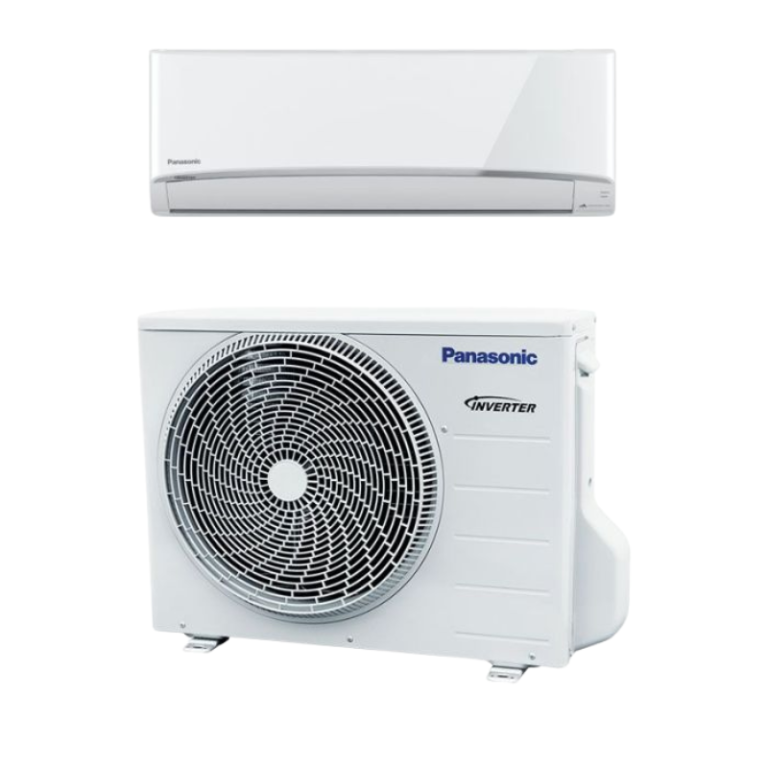
Panasonic designs its air conditioners with Singapore’s specific environmental challenges in mind. The brand’s commitment extends beyond cooling to creating a healthier indoor atmosphere. Many of their latest wall-mounted models feature their proprietary nanoe™ X technology, which generates hydroxyl radicals contained in water molecules to inhibit certain viruses, bacteria, and allergens, and reduce adhered odours. This is a significant advantage in enclosed HDB rooms where air can become stale.
Furthermore, Panasonic’s Econavi and Inverter technologies work in concert to deliver substantial energy savings. The inverter compressor adjusts its speed to match the cooling demand precisely, avoiding the power surges of conventional start-stop compressors. Econavi sensors detect room occupancy and sunlight levels, intelligently adjusting operation to avoid wasting energy cooling an empty room or over-cooling a shaded area. For the humid Singapore climate, a powerful yet quiet Dry Mode efficiently removes moisture without overcooling the space, enhancing comfort during rainy seasons.
Before purchasing any aircon, understanding the Housing & Development Board’s (HDB) installation guidelines is important. These rules ensure safety, structural integrity, and harmonious living for all residents.
Critically, HDB mandates that air-conditioner installers must be trained by the Building and Construction Authority (BCA). Homeowners bear the responsibility for engaging such qualified professionals. The guidelines strictly specify approved locations for the outdoor condensing unit. Installation is only permitted on reinforced concrete structural elements, such as designated precast ledges or beams. Mounting on parapet walls, decorative features, or window ledges is prohibited due to safety risks.
Additionally, HDB requires a minimum clearance of 1.2 metres between adjacent outdoor units to ensure adequate airflow and prevent heat exchange that cripples efficiency. The routing of copper pipes and drain hoses must follow designated paths, usually through pre-existing wall sleeves, without obstructing common corridors or affecting neighbouring units. Non-compliance can lead to enforcement action, including orders to remove the unit at the owner’s expense.
The physical placement of your Panasonic aircon’s indoor and outdoor units dramatically affects its cooling effectiveness, noise level, and lifespan. For the indoor unit, choose a central wall location that allows for unrestricted airflow across the room. Avoid positioning it directly above large furniture like wardrobes or televisions, as blocked airflow can cause the coil to freeze. Ensure the directional louvers can swing freely without hitting any obstacles.
The outdoor condenser’s placement demands even greater consideration. The ideal spot is on a shaded, well-ventilated concrete ledge. Avoid areas that receive direct afternoon sun or are enclosed by walls, as ambient heat buildup forces the compressor to work harder, increasing energy consumption and wear. Professional installers will also ensure the unit is perfectly level and mounted on anti-vibration pads to minimise operational noise transmission into your home and your neighbour’s.
A flawless installation is the most critical factor in your air conditioner’s long-term reliability. Here is how certified technicians from a service like FixFirst execute a proper setup:
| Step | Details |
|---|---|
| Step 1: Pre-Installation Site Survey and Compliance Check | The technician assesses your flat’s layout, verifies HDB-approved mounting points for the outdoor unit, checks the electrical supply’s capacity, and plans the most efficient and compliant routing for refrigerant piping and drainage. |
| Step 2: Mounting the Indoor Unit Bracket | Using a laser level, the technician secures the mounting bracket horizontally on the wall. An unlevel bracket is a common cause of improper condensate drainage and subsequent water leakage. |
| Step 3: Drilling and Piping Installation | A core drill creates a clean hole through the wall with a slight outward slope to facilitate condensate flow. Copper pipes are cut, deburred, and flared with precision tools, then wrapped in high-grade Class O Armaflex insulation to prevent energy loss and condensation drips. |
| Step 4: Installing the Outdoor Condenser | The unit is secured onto a galvanised steel bracket mounted on the reinforced concrete beam. Anti-vibration pads are placed beneath the condenser to absorb sound and prevent structural transmission of noise. |
| Step 5: Electrical Connection and System Evacuation | A dedicated electrical line from your home’s distribution board is connected. The refrigerant circuit is then linked and subjected to a deep vacuum process. This removes all moisture and air, which is essential for protecting the compressor and ensuring rated cooling efficiency. |
| Step 6: Leak Testing, Charging, and Commissioning | The system is pressurized and checked for refrigerant leaks. The correct amount of refrigerant, as specified by Panasonic for the pipe length, is charged. Finally, the system is activated, all modes are tested, and the drainage is confirmed to be working correctly. |
Need a new Panasonic aircon installed in your HDB flat? FixFirst ensures full compliance, precision workmanship, and warranty-safe procedures. From site survey to final commissioning, we guarantee a cool, quiet, and reliable setup—done right the first time.
Summary of Key Considerations for HDB Owners
| Aspect | Essential Guidance |
|---|---|
| HDB Compliance | Outdoor units must be installed on reinforced concrete beams/ledges only. A minimum 1.2m clearance from other units is mandatory. Always engage a BCA-trained installer. |
| Model Selection | Prioritise inverter technology for savings. Consider features like nanoe™ X for air purification and powerful Dry Mode for humidity control. |
| Installation Quality | Precision in levelling, vacuuming, and refrigerant charging is non-negotiable. It directly impacts cooling performance, efficiency, and system lifespan. |
| Optimal Positioning | Ensure free airflow for indoor units. Place outdoor units in shaded, ventilated locations to prevent compressor overload and high energy use. |
| Routine Maintenance | Clean filters monthly. Schedule professional chemical washing annually to maintain efficiency, cooling power, and healthy air. |
| Professional Service | Choose installers with specific HDB experience, BCA certification, and a proven track record. Your warranty and system longevity depend on it. |
When your Panasonic aircon encounters an issue, it will display an error code on the remote control or indoor unit LED. Understanding these codes helps in initial diagnosis.
Error Code H11/H12/H14: These indicate communication errors between the indoor and outdoor units (H11), or between indoor unit PCBs (H12, H14). A simple power reset (turning off the mains breaker for 10 minutes) can sometimes resolve this. If it persists, there may be wiring damage or a faulty control board.
Error Code H16/H17/H97/H98: These point to problems with the outdoor fan motor or its circuit (H16, H98) or current abnormalities (H17, H97). Check if the outdoor unit’s fan is obstructed by leaves or debris. Persistent codes require professional attention.
Error Code F3/F4/F6/F7/F8: These are temperature sensor errors. F3/F4 relate to the indoor coil sensor, F6/F7 to the outdoor coil sensor, and F8 to the outdoor air temperature sensor. A sensor may be dislodged, dirty, or have failed.
Error Code H19/H20/H23/H28/H30: These codes signal issues with the refrigerant system, such as a locked compressor (H19), high pressure (H20, H23), or low pressure (H28, H30). They can be triggered by a dirty outdoor coil, a refrigerant leak, or a faulty expansion valve. Professional diagnosis is crucial.
Error Code U2/U4: These denote low or high voltage detection. They may occur during a power grid fluctuation. If the code remains after stable power is restored, the unit’s internal power supply components may need checking.
📌Important Note: Always start with basic checks: ensure the air filter is clean, confirm both indoor and outdoor units are not obstructed, and try a system reset. For any error code involving refrigerant (gas) or electrical components, contact a licensed technician immediately. DIY repairs on these systems are dangerous and will void your warranty.
Selecting the right installation partner is as important as choosing the aircon brand itself. FixFirst provides a service standard that ensures your Panasonic system performs as engineered for years to come.
✔️ BCA-Trained and HDB-Compliant Expertise: Our technicians are BCA-certified and possess deep, current knowledge of HDB’s installation framework. We guarantee a setup that meets all safety and regulatory standards, giving you peace of mind.
✔️ Manufacturer-Specific Installation Protocols: We follow Panasonic’s precise installation guidelines, using calibrated tools for critical steps like pipe flaring and vacuuming. This protects your manufacturer’s warranty and ensures the unit delivers its advertised energy efficiency.
✔️ Integrated Multi-Trade Service: FixFirst is not just an aircon team. We are licensed electricians and plumbing specialists. This holistic expertise allows us to manage the entire installation ecosystem, ensuring proper electrical load, creating leak-free drainage, and executing a tidy, professional job.
✔️ Transparent Pricing and Workmanship Warranty: We provide clear, upfront quotations with no hidden costs. Our installation is backed by a strong workmanship warranty, and we stand by the quality of our work with reliable after-sales support.
✔️ Respect for Your Home: We treat your HDB flat with the utmost care. Our process emphasises cleanliness, meticulous workmanship, and a final result that is both functionally perfect and visually neat.

For Singapore’s dusty and humid environment, a professional chemical wash service every 6 to 12 months is recommended. Regular monthly cleaning of the filters is essential.
The nanoe™ X generator releases hydroxyl radicals to inhibit certain airborne pollutants and odours. It operates independently of the cooling function and can be left on continuously to help maintain better indoor air quality.
No. HDB only permits installation on reinforced concrete structural beams or designated ledges. Placing a heavy condenser on a tiled service yard floor or grating is unsafe and non-compliant.
The most common causes are a clogged air filter, dirty indoor or outdoor coils, or low refrigerant levels. Start by cleaning the filter. If the issue persists, a professional cleaning or leak check is needed.
Yes, Panasonic’s Dry Mode is specifically designed for high-humidity environments. It runs the compressor at lower speeds to prioritise moisture removal over temperature reduction, making the room feel less clammy without excessive cooling.
A standard 12-14 sqm HDB bedroom usually requires a 9,000 BTU/h unit. Larger rooms (up to 20 sqm) or those with significant west sun exposure may need 12,000 BTU/h. A professional can perform a detailed load calculation.
No. The manufacturer’s warranty covers defects in materials and workmanship of the unit itself. It does not cover problems arising from incorrect installation, such as refrigerant leaks due to poor piping work or electrical issues. This underscores the need for professional installers.
A straightforward installation for a single unit in an HDB flat typically takes 3 to 5 hours. More complex setups, such as those requiring longer pipe runs or new electrical points, may take a full day.
It is strongly discouraged. Old pipes may contain contaminants, micro-leaks, or incompatible oil from the previous refrigerant. New R32 refrigerant (used in newer Panasonic models) also requires specific pipe standards. New installation ensures reliability.
A consistent buzzing could indicate a loose component, a vibrating refrigerant pipe, or an electrical issue like a failing contractor. An intermittent buzzing during operation is often normal from the inverter components. If it is loud, a technician should inspect it.
A Panasonic wall-mounted air conditioner is a smart investment in your HDB home’s comfort and air quality. Its advanced features are designed to meet the exacting demands of the tropics. Yet, this sophisticated technology can only deliver on its promises when paired with expert installation and consistent care. From navigating HDB’s regulatory framework to executing a technically perfect setup, every detail matters.
Don’t leave the performance of your premium Panasonic system to chance. Ensure a compliant, efficient, and durable installation from the start. Contact FixFirst today for a detailed, obligation-free site survey and quotation. Let our technicians provide the expert installation and servicing your aircon deserves, backed by our commitment to your complete satisfaction.