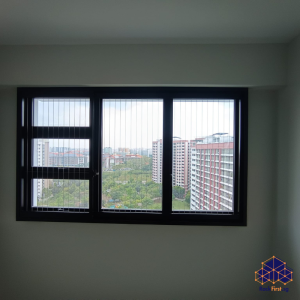
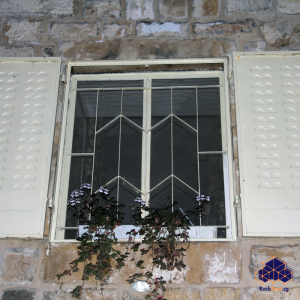
The effectiveness of an invisible grille does not rest on the quality of its cables alone. The spacing between those cables determines whether the grille genuinely protects or merely provides a false sense of security. Invisible grille wire spacing directly impacts safety for children and pets, and selecting the correct gap requires a clear understanding of your household’s needs.
In Singapore’s high-rise living environment, windows and balconies present real fall risks. Invisible grille wire spacing must be tight enough to prevent a child’s head or a pet’s body from passing through. The industry standard offers several spacing options, with the most common choices being 2 inches and 3 inches. The decision between these two measurements affects not only safety but also cost, visibility, and airflow.
HDB regulations specify that gaps in safety barriers must not exceed 100mm (approximately 4 inches). However, responsible homeowners recognise that meeting the minimum requirement does not always equal providing the best protection. Invisible grille wire spacing of 3 inches or less aligns with HDB safety standards while offering superior fall prevention. Understanding the nuances of invisible grille wire spacing helps homeowners make informed decisions that balance safety, aesthetics, and budget.

Invisible Grille 2 Inch vs 3 Inch Spacing: The Practical Comparison
The choice between invisible grille 2 inch vs 3 inch spacing represents one of the most significant decisions in any invisible grille installation. Each option serves different household profiles, and understanding their respective advantages clarifies which spacing suits your home.
2-inch spacing provides a tighter barrier. This option works best for homes with toddlers who might push against the cables or attempt to squeeze through narrow gaps. The closer spacing also offers superior protection for cats, as felines can compress their bodies to fit through surprisingly small openings. Many pet owners choose 2-inch spacing for cat-proofing, with some contractors offering even tighter custom spacing down to 1.5 inches. The trade-off involves higher material and labour costs, as more cables are required to cover the same area.
3-inch spacing represents the middle ground. This option suits most families without very young children or small pets. The 3-inch gap prevents a child from squeezing through while maintaining excellent visibility and airflow. It costs less than 2-inch spacing because fewer cables are needed. For homeowners who do not have toddlers or cats, 3-inch spacing delivers adequate protection without unnecessary expense.
The invisible grille 2 inch vs 3 inch spacing decision also affects the grille’s visual appearance. Tighter spacing means more cables, which slightly reduces the “invisible” effect. At 3 inches, the cables remain barely noticeable from a distance, preserving the unobstructed view that draws homeowners to invisible grilles in the first place.
Safety Standards and HDB Compliance for Wire Spacing
HDB regulations provide clear guidance on invisible grille wire spacing. The Housing and Development Board requires that gaps in safety barriers do not exceed 100mm. This requirement translates to approximately 4 inches. However, reputable contractors recommend invisible grille wire spacing of no more than 3 inches as a best practice.
For most HDB flats, installing an invisible grille behind internal windows does not require prior HDB approval. The grilles must remain fixed internally and must not protrude from the building’s main facade. Service yards and balcony parapets follow different rules and require formal HDB approval. Regardless of location, invisible grille wire spacing must comply with safety standards to ensure the grille serves its protective purpose.
Engaging a BCA-approved window contractor remains mandatory for any invisible grille installation. Only BCA-registered contractors listed with HDB may carry out window works. Failure to engage a registered contractor constitutes an offence under the Housing & Development (Renovation Control) Rules, with fines up to $5,000. A qualified contractor understands the nuances of invisible grille wire spacing and can recommend the appropriate gap for your specific windows and household needs.
Choosing the Right Spacing for Your Household
Selecting the correct invisible grille wire spacing requires an honest assessment of your household composition. Families with young children benefit from 2-inch spacing, which prevents small heads and limbs from passing through. The tighter gap provides peace of mind, especially for toddlers who are naturally curious about windows and balconies.
Pet owners face a different calculation. Cats, in particular, can squeeze through gaps that seem impossibly narrow. A standard 3-inch or 4-inch spacing leaves enough room for a feline to slip through. The correct invisible grille spacing for cats measures 1.5 to 2 inches. This spacing prevents cats from squeezing through while still allowing airflow and natural light. Some contractors offer custom spacing down to 38mm (approximately 1.5 inches) for pet owners who want maximum protection.
Homeowners without young children or pets may find that 3-inch spacing meets their needs adequately. This option provides fall protection for adults and older children while maintaining the grille’s near-invisible appearance. The cost savings compared to 2-inch spacing can be substantial, as fewer cables are required.
The invisible grille 2 inch vs 3 inch spacing decision also considers the window’s location. Windows that are frequently opened for ventilation may benefit from tighter spacing, as the cables remain more stable under repeated movement.
Material Quality and Installation Integrity
Invisible grille wire spacing only matters if the cables themselves maintain their tension and position. High-tensile stainless steel cables, typically 2.0mm to 2.5mm in diameter, provide the strength required for safety barriers. Marine-grade 316 stainless steel offers the best corrosion resistance for Singapore’s tropical climate, withstanding high humidity, heavy rain, and salt air.
Proper installation ensures that invisible grille wire spacing remains consistent across the entire window or balcony. Each cable must be tensioned correctly. Too loose and the cables sag, creating wider gaps than specified. Too tight and they place excessive strain on the mounting points, potentially warping the window frame over time. A professional installer uses a gauge to measure the exact pull, preventing the frame from bearing excessive load.
The mounting method also affects the integrity of invisible grille wire spacing. Frame-mounted grilles attach directly to the window frame, offering a cleaner profile but requiring sufficient frame thickness to hold the tension. Wall-mounted grilles anchor into concrete, providing stronger support but requiring more drilling. Both methods can maintain proper invisible grille wire spacing when installed correctly.
Making the Final Decision on Wire Spacing
The choice of invisible grille wire spacing ultimately depends on your household’s specific safety requirements. No single spacing option works for every home. Families with toddlers and cats require tighter spacing, while households without small children or pets can opt for wider gaps without compromising safety.
Consider the following practical guidelines when deciding on invisible grille wire spacing. For homes with children under five years old, 2-inch spacing provides the safest option. For homes with cats, 1.5 to 2-inch spacing is essential. For homes without young children or pets, 3-inch spacing offers adequate protection at a lower cost. For homes with older children and no pets, 4-inch spacing may suffice, though 3 inches remains the recommended maximum for safety.
Remember that invisible grille wire spacing is not a one-size-fits-all measurement. Different windows within the same home may benefit from different spacing. Balcony grilles, for example, may require tighter spacing than bedroom windows if children frequently access the balcony.
Protect Your Home with the Right Invisible Grille Wire Spacing
Choosing the correct invisible grille wire spacing is one of the most important decisions you will make for your home’s safety. The difference between 2 inches and 3 inches may seem small, but that gap can mean the difference between protection and tragedy. Understanding invisible grille 2 inch vs 3 inch spacing empowers you to make an informed choice that suits your household’s unique needs.
FixFirst is a BCA-approved window contractor. We can assess your windows, recommend the appropriate invisible grille wire spacing, and install your grilles. Contact us today over Whatsapp.