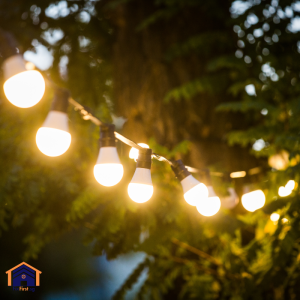
Singapore’s outdoor spaces need light fixtures that laugh off a sudden afternoon downpour. A cheap fitting bought online might look good for two months, then you find a pool of water inside the glass and rust streaks on your wall. Good wall mount outdoor light fixtures start with the right IP rating. IP44 works for a fully sheltered balcony or a corridor never touched by direct rain. For a car porch, an open service yard, or a wall that catches wind-driven rain, you want IP65. That rating means the fixture stays sealed against water jets and fine dust.
The body material determines how long the light keeps its looks. Die-cast aluminium with a polyester powder coat stands up to both UV exposure and salt-laden air if you live near the coast. Grade 304 stainless steel offers a brighter finish and resists rust well, but wipe it down every few months to prevent the dull brown tea-staining that appears in coastal humidity. Avoid cast iron, which looks great in temperate countries but sweats rust within a year in Singapore unless you keep it constantly painted. The diffuser panel should be tempered glass, not acrylic, because acrylic hazes under constant sun and becomes brittle.

Where To Position Wall Mount Outdoor Light Fixtures in an HDB Flat
HDB corridors outside your unit door technically belong to the town council. You cannot mount a fixture there without written approval, and most councils refuse. Your own balcony, service yard, and the wall just outside a ground-floor patio remain yours to light as you see fit. Place wall mount outdoor light fixtures at about 2.3 metres above the finished floor. That height throws a broad cone of light downward without shining directly into anyone’s eyes or into a neighbour’s window.
A fixture with a downward-facing light distribution, sometimes called a cutoff or half-cutoff design, keeps the light on your own property. For a balcony, mount a single fixture on the wall closest to the sliding door, aimed outward. In a service yard, position the light above the washing machine area but at least 60 centimetres horizontally from any water outlet. A motion sensor on the fixture saves electricity and turns the light on only when you step out with a laundry basket. Adjust the sensor to ignore small animals and the daytime sun.
Wiring Wall Mount Outdoor Light Fixtures to Code
Any fixed outdoor light requires a permanent connection to your home’s electrical circuit. A licensed electrician runs an outdoor-rated cable, typically a rubber-sheathed flexible cord or an SWA-type cable, through a weatherproof conduit or a dedicated outdoor junction box. The point where the cable enters the back of the fixture must seal with a rubber grommet or a compression gland. Silicone sealant applied around the top and sides of the mounting plate stops water from creeping behind the bracket. Leave the bottom unsealed so any condensation can escape.
The Energy Market Authority draws a clear line: only a licensed electrical worker may install, replace, or relocate a fixed outdoor light point. An unlicensed installation not only puts your flat at risk but also voids your home insurance if a short causes a fire. After wiring, the electrician tests the earth continuity and measures the insulation resistance. With outdoor fixtures, a proper earth connection protects you from a shock if water ever breaches the insulation.
Drilling into External Walls, Tiles, and Cladding
External HDB walls are almost always solid concrete with a plaster skim coat, sometimes topped with tiles. Use a hammer drill with a 6 mm or 8 mm masonry bit. If the wall carries tiles, switch to a carbide-tipped tile bit and drill slowly without hammer action until you clear the glaze. Masking tape over the mark prevents the bit from wandering. Tap a nylon wall plug deep into the concrete behind the tile, not just the tile layer. Stainless steel screws, sized for the plug, resist corrosion and will not bleed brown stains down your wall after the first few rains.
Some condo balconies and newer flats feature aluminium composite panels or cement board cladding as an outer skin. These cannot hold a fixture’s weight alone. A handyman mounts a treated timber batten or a metal bracket that fastens through the cladding into the structural wall behind. Mounting directly into the thin cladding panel guarantees a failure during a heavy storm when the wind catches the light.
Rental-Safe and Non-Drilling Options
Tenants who cannot drill into an external wall still have a few workable solutions. A plug-in outdoor fixture with a weatherproof plug connects to an existing balcony power socket. Use outdoor-rated cable clips to dress the cord neatly along the wall. Solar-powered wall mount fixtures with a separate panel also skip all wiring and holes. They attach with strong adhesive brackets or wrap-around straps that grip a railing or a vertical pipe. Their light output suits ambience more than task lighting, but they mark the edges of a balcony well enough after dark.
If you drill a single pair of small holes, a handyman can patch and paint them before you hand the keys back. The repair takes less than an hour for a standard white wall and costs far less than a dispute over your deposit.
A Dry, Reliable Light for Every Outdoor Wall
Wall mount outdoor light fixtures that come with the right IP rating, corrosion-proof metal, and a proper weathertight installation will last for a decade with zero fuss. They make your balcony usable after sunset, light the way through your service yard, and add a layer of safety to steps and corners. At FixFirst, we take care of the whole process: selecting the fixture that fits your wall, wiring it to code, and mounting it dead level without a single cracked tile. Call us today and let us put a solid, dry light exactly where you need it.