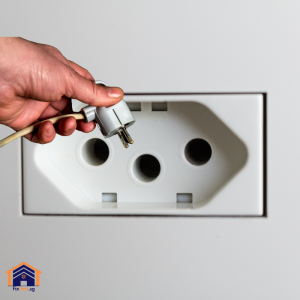
A wall mounted USB socket replaces one or both of the standard three-pin outlets on a switch plate with USB-A or USB-C charging ports. Your phone, tablet, wireless earbuds, and portable fan plug straight into the wall via their own charging cables. The immediate payoff is a tidier bedside table, kitchen counter, or console area. You stop hunting for a charging brick that someone borrowed and never returned. You gain back a power point that would otherwise sit behind a bulky adaptor and block the adjacent socket.
In HDB flats where most bedrooms have only two or three power points on a single wall, that freed-up socket matters a lot. A couple of USB ports on the wall let you run a bedside lamp and an alarm clock while still charging two phones. The built-in USB circuits draw far less standby power than many older plug-in adaptors, which quietly waste electricity and heat up even when nothing is connected.

Choosing a Wall Mounted USB Socket Safe for Singapore Homes
Only buy a wall mounted USB socket that carries the Safety Mark from Enterprise Singapore. The mark confirms the unit passed local testing and meets the requirements of the Consumer Protection (Safety Requirements) Regulations. A genuine Safety Mark label shows a distinct serial number you can verify on the official database.
Check the USB port output before you commit. Older sockets deliver a sluggish 1 amp per port, which takes forever to charge a modern phone. Choose a socket that provides at least 2.4 amps shared across the USB-A ports, or one with a USB-C Power Delivery port capable of 18 watts or more. Many current models offer a combination: one USB-C PD port for fast-charging a phone, plus one or two USB-A ports for older cables and devices. If your household uses a mix of Lightning and USB-C cables, this configuration covers everyone.
The socket also needs to fit the standard Singapore wall box. Most HDB units use a 35 mm deep metal or plastic back box sunk into the wall. A USB socket is deeper than a regular 13A socket because it houses a transformer and charging circuitry. Measure the depth inside the box before buying. Some slim wall boxes from older flats cannot accommodate a USB socket without replacing the box itself, which adds plastering work.
Installing a Wall Mounted USB Socket Requires a Licensed Electrician
The Energy Market Authority forbids anyone without a valid electrical worker licence from replacing a fixed socket outlet. This is a wiring alteration, not a simple DIY swap. Turn off the mains before the electrician starts, not just the circuit breaker for that room. The electrician tests for dead, strips and re-terminates the cables if the copper is oxidised, and secures the new faceplate flush to the wall. A loose connection behind a wall mounted USB socket can arc, overheat, and trip the circuit at best, or start a fire at worst.
If the back box needs replacement, the electrician removes the old box, widens the recess, and patches the plaster around the new one. The wall will need a touch-up paint job afterwards. Plan for half a day to a full day depending on the condition of the existing box and wiring.
Where a Wall Mounted USB Socket Delivers the Most Value
Master bedroom bedside points are the most obvious upgrade. Install a double USB socket on each side of the bed and no one fights over the charging spot. The living room settee wall benefits too, especially if your family charges tablets and power banks there. In the kitchen, a USB socket near the counter lets you keep a recipe tablet running without trailing a charging brick across the wet area, but never install one within 60 cm of a sink or wash point. Moisture and USB circuitry do not mix.
Bathrooms, service yards, and wet kitchens demand careful thought. Unless the socket sits well clear of water splashes and has IPX4 protection, skip a USB variant and use a standard shaver socket or no socket at all. Water damage inside a USB port corrodes the contacts silently and eventually shorts out the circuit.
A Note for Renters
Changing a fixed wall socket counts as a modification, so always get written consent from your landlord first. If the answer is no, you can achieve a similar result with a slim multi-USB wall plug that sits nearly flush to the socket faceplate. These adaptors offer the same convenient access to USB ports without any rewiring. When your lease ends, you simply unplug them and take them along.
Get a Clean Charging Setup Installed Correctly
A wall mounted USB socket declutters your daily charging routine and makes any room feel more organised. It belongs inside a properly sized wall box, fitted by a licensed hand, and backed by a genuine Safety Mark. FixFirst handles the entire upgrade, from checking your wall box depth to installing and testing the new socket. Call us today for a quick assessment, and start charging straight from the wall, minus the mess of adaptors.