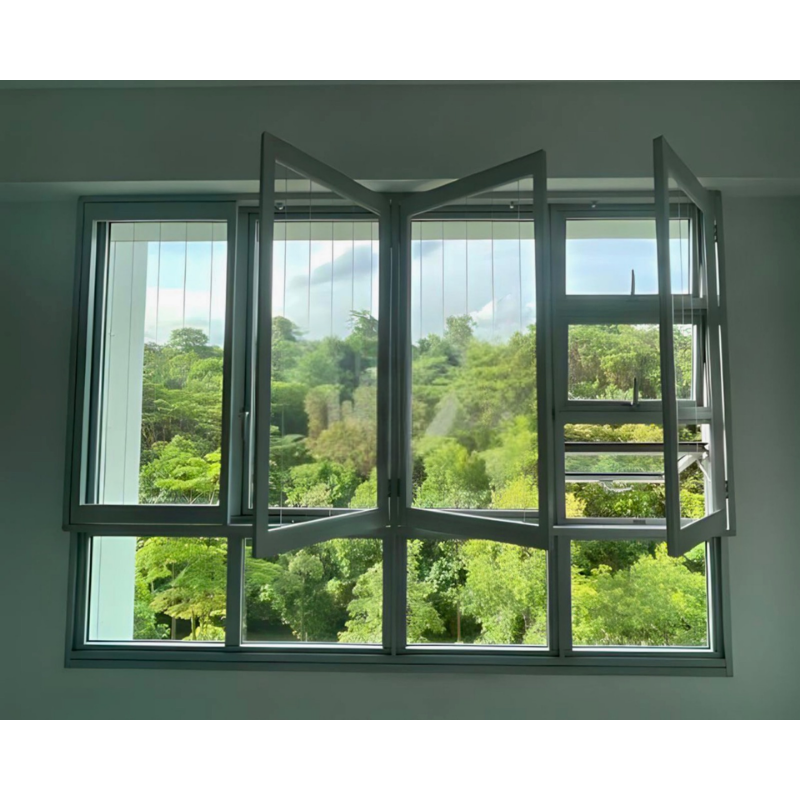
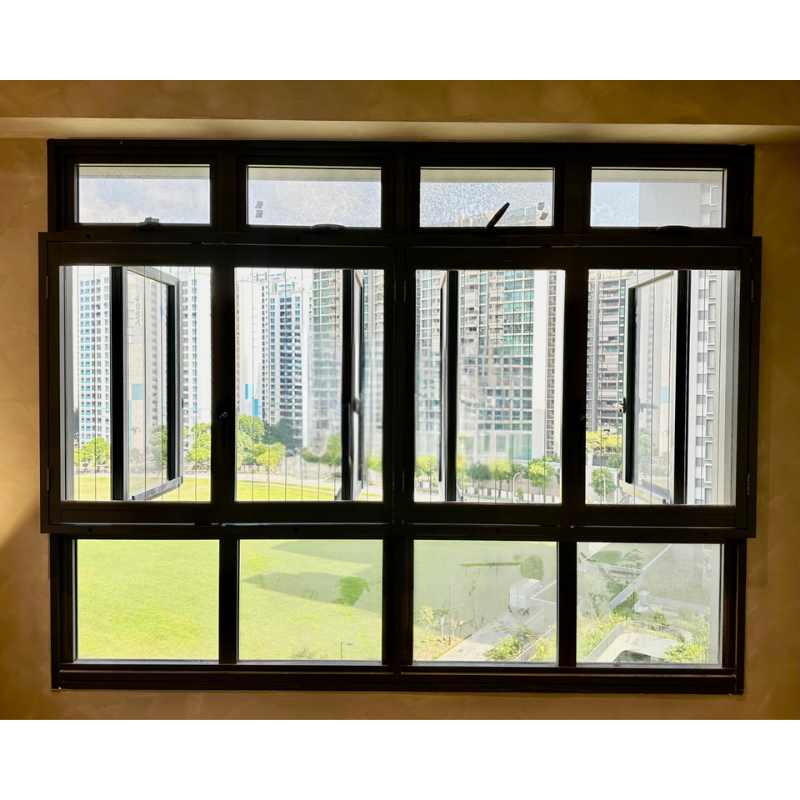
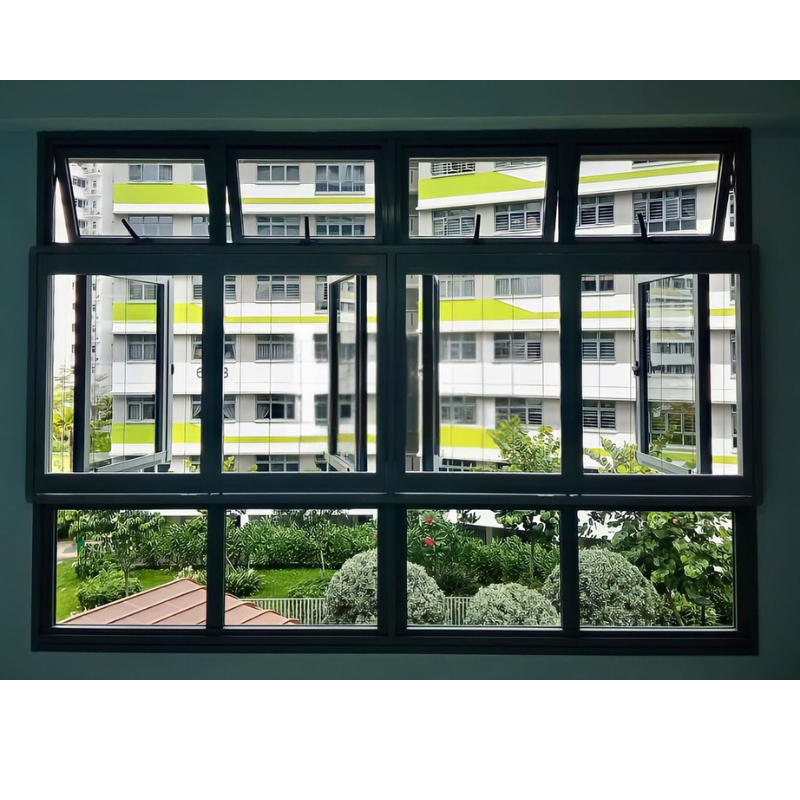
Swing type invisible grilles offer a functional advantage. They open outward on hinges. This feature allows homeowners to access the exterior glass for cleaning. The design also provides an emergency exit route when required.
The swinging mechanism adds complexity to the window grille installation. The hinges must align perfectly with the window frame. The locking system must secure the grille when closed. This combination of accessibility and security requires careful installation.

The Hinge System: The Core Mechanism
The hinges support the full weight of the grille. They attach to one side of the window frame. The grille swings open like a door.
Stainless steel hinges resist corrosion in Singapore’s humid climate. The hinge pins must fit tightly to prevent sagging. Loose hinges cause the grille to drop over time. This misalignment prevents the locking mechanism from engaging correctly. Proper hinge selection determines the long-term reliability of the swing action.
The Locking Mechanism: Security Considerations
The lock secures the grille in the closed position. It consists of a latch that catches onto the opposite frame. A key or knob operates the lock.
The lock must withstand attempts at forced entry. Low-quality locks break easily. They also corrode in Singapore’s weather. Homeowners should inspect the lock material. Brass or stainless steel locks offer better durability. The lock placement also matters. It should sit at a height that children cannot reach easily.
The Mechanism's Vulnerability: Wear and Tear
Moving parts experience wear over time. The hinges require periodic lubrication. The lock mechanism needs regular cleaning.
Dust and debris accumulate in the hinge pins. This causes grinding and stiffness. The lock cylinder may also jam if not cleaned. Neglecting maintenance leads to premature failure. Homeowners should schedule annual checks for swing grilles. This ensures the mechanism operates smoothly. A stuck grille defeats the purpose of the swing function.
The Convenience Factor: Cleaning and Maintenance
The swing feature allows direct access to the glass. Homeowners can clean the exterior windows easily. This eliminates the need for magnetic cleaners or professional services.
The convenience comes with a trade-off. The grille requires clearance to swing outward. External obstacles like pipes or planter boxes may obstruct the swing. The installation must account for these obstacles. Without proper clearance, the grille will not open fully. This negates the primary benefit of the swing type.
Safety Features: Child Resistance
The locking system must incorporate child-resistant features. A key-operated lock prevents children from opening the grille.
The lock should also include a secondary latch. This latch prevents the grille from opening accidentally. The grille’s wire spacing must comply with safety standards. The typical spacing does not exceed 150mm. This prevents a child’s head from passing through. These features combine to provide a safe environment for families.
Cost Implications of Swing Type Grilles
Swing type grilles cost more than fixed types. That’s because the hinges and locks add to the material cost. Plus, the installation requires more labor and precision.
The higher cost provides added functionality. Homeowners gain the ability to clean windows easily. They also gain an emergency exit route. The cost difference reflects the added engineering and components. Homeowners should weigh the benefits against the additional expense. The long-term convenience often justifies the higher upfront cost.
Installation Nuance: Clearance and Alignment
The clearance for the swing action demands precise measurement. The grille must not hit any external structures. The hinges must align vertically for smooth operation.
The installer measures the available space before installation. They also check the frame’s condition. The frame must support the hinge weight. Uneven frames cause misalignment. This leads to difficulty in closing the grille. Professional installers ensure correct alignment during installation.
Swing vs. Fixed Type Grilles
Swing type grilles offer accessibility. Fixed type grilles offer a cleaner aesthetic. The choice depends on the homeowner’s priorities.
Swing type provides cleaning access. Fixed type provides a more permanent structure. The swing type suits homes where window maintenance is frequent. The fixed type suits homes where access is not a priority. Homeowners should consider their cleaning habits before choosing.
Conclusion: Balancing Access and Security
Swing type invisible grilles combine security with convenience. They offer a practical solution for Singapore homes. The hinges and locks require professional installation and regular maintenance.
The decision to install a swing type grille depends on the property’s specific needs. The clearance, frame condition, and usage frequency all factor into the choice. Professional assessment ensures the correct installation for the swing mechanism.
FixFirst provides specialized installation for swing type grilles. Contact FixFirst to discuss your window access requirements. Our assessment ensures your grille functions as intended for years to come.