The relentless Singaporean heat makes an air conditioner a household essential. For HDB dwellers, selecting the right cooling system involves balancing performance, energy efficiency, space constraints, and strict regulatory compliance. Among the many brands available in Singapore, Midea has carved a significant niche, offering reliable technology that delivers comfort without exorbitant cost. This detailed guide explores everything you need to know about owning a Midea wall mounted air conditioner in your Singapore home, from initial selection and HDB-compliant installation to long-term maintenance and repair.
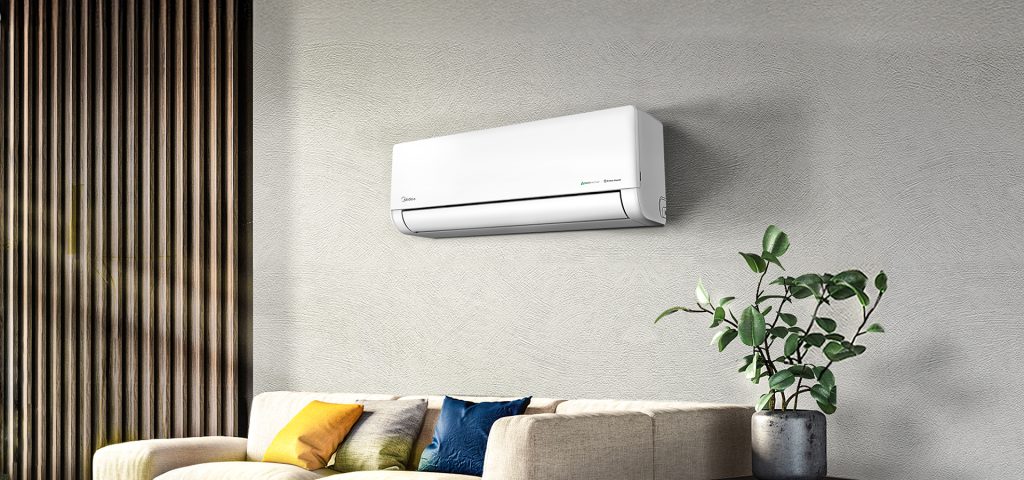
Midea, a global leader in appliance manufacturing, brings to the table air conditioners that resonate with the practical needs of Singapore residents. Their units often feature inverter technology, which is important in our climate for maintaining consistent temperatures and achieving substantial energy savings. A popular choice among homeowners is the Midea mission inverter series wall mounted models, known for their quiet operation and efficient cooling. Particularly, the Midea 1.5hp mission inverter series wall mounted unit strikes an ideal balance for most common HDB bedrooms and living areas, providing ample cooling power without overwhelming energy consumption. Before purchase, understanding your space’s square footage and the unit’s BTU (British Thermal Unit) rating ensures you select a model that cools effectively without strain.
The Housing & Development Board (HDB) enforces clear guidelines to ensure structural integrity, safety, and neighbourly consideration. Ignoring these rules can lead to costly fines and mandatory reinstatement works. Key regulations stipulate that the Midea wall mounted air conditioner outdoor condenser must sit on a prescribed reinforced concrete cantilevered beam or within an approved bracket space. You cannot mount the unit on parapet walls, lightweight walls, or the building’s structural facade. Drainage pipes must route condensate water properly into a floor trap or common drain, not allowing it to drip onto neighbouring units or common areas. Electrical work requires a Licensed Electrical Worker to ensure your home’s wiring can handle the new load safely. Familiarizing yourself with the official HDB guidelines is a non-negotiable first step before any installation project begins.
The Critical Importance of Positioning and Placement
Optimal positioning of your Midea wall mounted air conditioner directly impacts efficiency, cooling uniformity, and maintenance frequency. The indoor unit should mount on a wall that allows for undisturbed air circulation, away from direct sunlight or heat sources like lamps. Ideally, place it high on the wall to facilitate cool air distribution, but ensure at least 15-20 cm of clearance from the ceiling for proper air intake. Avoid positioning the unit directly above large furniture or beds where the airflow might cause discomfort. For the outdoor condenser, professional installers consider factors like prevailing wind direction, accessibility for future servicing, and minimizing the length of refrigerant piping—which, if excessively long, can reduce system efficiency. Strategic placement conceived during installation prevents a host of performance issues years down the line.
A proper installation is the bedrock of your air conditioner’s lifespan and performance. Here is how a certified technician from a service like FixFirst would approach mounting your new Midea unit.
| Step | Details |
|---|---|
| Step 1: Site Survey and Planning | The technician conducts a thorough assessment of your HDB flat, checking the intended location against HDB rules, electrical points, drainage options, and the best path for refrigerant piping between the indoor and outdoor units. |
| Step 2: Mounting Bracket Installation | Using a precision spirit level, the technician securely anchors the heavy-duty bracket for the indoor unit to a solid wall, often employing concrete anchors to bear the weight reliably over years of operation. |
| Step 3: Drilling and Piping | A core drill creates a single, clean hole through the wall at a slight outward angle to prevent rainwater ingress. The copper refrigerant pipes, drain hose, and electrical cables are then carefully measured, cut, and insulated. |
| Step 4: Outdoor Unit Setup | The condenser is placed on the HDB-approved ledge or installed on a structurally sound bracket. The technician ensures it sits perfectly level and with ample space on all sides for heat dissipation and maintenance access. |
| Step 5: Indoor Unit Connection and Vacuuming | The Midea wall mounted air conditioner indoor unit is hung on the bracket. The technician connects all piping and performs a crucial vacuum pump process to remove moisture and air from the refrigerant lines, a step critical for system health. |
| Step 6: Electrical Connection and Testing | A Licensed Electrical Worker makes the final power connections. The system is then powered on and tested for cooling performance, drainage flow, abnormal noises, and thermostat accuracy. |
Need a new Midea aircon installed in your HDB flat? FixFirst’s certified technicians handle every step—from site survey to final testing—with full compliance to HDB and EMA regulations. We ensure clean drilling, secure mounting, proper insulation, and perfect performance. Let us deliver a cool, quiet, and reliable setup—done right the first time.
Protecting your purchase is vital. Always register your Midea wall mount aircon warranty promptly, as failure to do so can void the coverage. Understand the warranty’s terms: it often covers compressor parts for a longer period (e.g., 5 years) and other components for a shorter duration. Crucially, the Midea wall mount aircon warranty typically mandates that installation must be performed by a competent professional. Unauthorized or DIY installation can immediately invalidate the manufacturer’s promise. For models like the Midea 1.5hp mission inverter series wall mounted unit, preserving the warranty involves adhering to recommended annual servicing. This regular maintenance cleans filters, checks refrigerant levels, and inspects electrical components, ensuring the system runs as intended and any potential issues get addressed early.
Even the most reliable Midea wall mounted air conditioner may occasionally communicate an issue through its display panel. Understanding these error codes empowers you to take preliminary action and provide accurate information to a technician. While specific aircon error codes can vary slightly between models (always consult your user manual first), here are some of the most common alerts for Midea mission inverter series wall mounted units and their typical meanings.
E1, E3, or E4 Codes (Temperature Sensor Faults)
These frequent codes indicate a problem with the room temperature, evaporator (indoor coil), or condenser (outdoor coil) sensors. The unit cannot read the temperature accurately, leading to erratic operation or shutdown. Before calling for service, you can try powering the system off completely at the main electrical isolator switch for 5-10 minutes, then restarting. If the code persists, a sensor likely needs replacement.
E5 or EC Codes (Communication Errors)
This signals a breakdown in communication between the indoor unit’s PCB (printed circuit board) and the outdoor unit. Often, this stems from a loose connection, signal interference, or a fault in the wiring connecting the two units. Check if any visible wiring has been disturbed. Resetting the power as described above can sometimes clear a temporary glitch. A recurring E5/EC code requires a technician to diagnose the communication line and PCBs.
P1, P2, or P3 Codes (Voltage Protection)
These codes point to issues with the power supply. P1/P2 often indicate abnormal or fluctuating voltage (too high or too low), while P3 can signify a phase loss in a three-phase system. This is a critical warning. Ensure no other high-power appliances are causing a surge on the same circuit. The problem may lie with your home’s electrical supply or the aircon’s internal protection module. Contact a Licensed Electrical Worker or your aircon technician to investigate.
P7 Codes (Exhaust Temperature Protection)
This is a safety alert from the outdoor unit, often related to the compressor’s exhaust temperature being too high. Common causes include severe lack of refrigerant, a blocked condenser coil choked with dirt and leaves, or a faulty fan motor preventing proper heat dissipation. For a Midea 1.5hp mission inverter series wall mounted unit, this often highlights the need for professional cleaning or a refrigerant check.
Complete List of Midea Aircon Error Codes
For further reference, use the following list of Midea aircon error codes and their meanings:
E3, E4, E5, E7, Eb, Ed, EF, EP, EU, F9,Fb, Fd Troubleshooting
- E3 – combined water outlet temperature sensor error
- E4 – water outlet temperature sensor error
- 1E5 – air side heat exchanger refrigerant outlet temperature sensor T3A error
- E7 – outdoor ambient temperature sensor error
- 2Eb – water side heat exchanger anti-freezing temperature sensor Taf2 error
- 1Ed – discharge pipe temperature sensor of system A error
- 2Ed – discharge pipe temperature sensor of system B error
- EF – water inlet temperature sensor error
- EP – discharge pipe temperature sensor failure alarm
- EU – air side heat exchanger refrigerant total outlet temperature sensor Tz/7 error
- 1F9 – inverter module temperature sensor(Tfin1) error
- 2F9 – inverter module temperature sensor(Tfin2) error
- Fb – pressure sensor error
- Fd – air suction temperature sensor error
What You Can and Should Do:
- Note the Exact Code: Write down the specific code (e.g., E3) and any accompanying symptoms (e.g., unit not cooling, fan not spinning).
- Perform a Basic Reset: Turn off the unit via the remote, then switch off its dedicated electrical isolator or circuit breaker for several minutes. Restart to see if the error clears. This can resolve temporary electronic hiccups.
- Conduct a Visual Check: Safely inspect the outdoor unit for obvious obstructions, excessive dirt, or unusual noises. Ensure the indoor unit filter is clean.
- Consult Your Warranty: If the code persists, refer to your Midea wall mount aircon warranty documentation and contact an authorised service provider. Attempting complex internal repairs yourself will void the warranty.
When To Call FixFirst
If a simple reset does not resolve the error, it’s time to call in the experts. Our technicians are equipped with specialised diagnostic tools to accurately interpret these codes, pinpoint the root cause—whether it’s a faulty sensor, a refrigerant leak, or an electrical fault—and perform the necessary repairs to restore your cooling system efficiently and safely. Persistent error codes are your air conditioner’s way of asking for professional help; timely response can prevent minor issues from escalating into major component failures.
Summary Table: Key Points for HDB Owners
| Aspect | Key Consideration |
|---|---|
| Model Selection | Match BTU/HP to room size. The Midea mission inverter series wall mounted models offer efficient, quiet cooling. |
| HDB Compliance | Outdoor unit must go on the concrete beam or approved bracket. Drainage must not inconvenience neighbours. |
| Installation | Must be performed by a professional to preserve warranty and ensure safety. Includes critical steps like vacuum pumping. |
| Positioning | Indoor unit high on a structural wall with clearance; outdoor unit with space for airflow and service access. |
| Warranty | Register immediately. Professional installation is mandatory to keep the Midea wall mount aircon warranty valid. |
| Servicing | Annual professional maintenance is recommended. Clean filters monthly for peak efficiency. |
| Professional Help | Use a licensed, insured provider like FixFirst for guaranteed compliance, warranty safety, and quality workmanship. |
Some of the Midea Aircon Systems Used in Singaporean Households

Midea All Easy Pro Courts Exclusive System 4 Outdoor Unit MCE-4M28E
Notable Features: Graphene, Prime Guard, 5-layer Structure, Extreme Durability, Strong Hydrophilicity
Category: Wall Mounted
Color: White
Capacity: 30000 BTU

Midea All Easy Pro Courts Exclusive System 2 Outdoor Unit MCE-2M16E
Notable Features: Graphene, Prime Guard, 5-layer Structure, Extreme Durability, Strong Hydrophilicity
Category: Wall Mounted
Color: White
Capacity: 18000 BTU
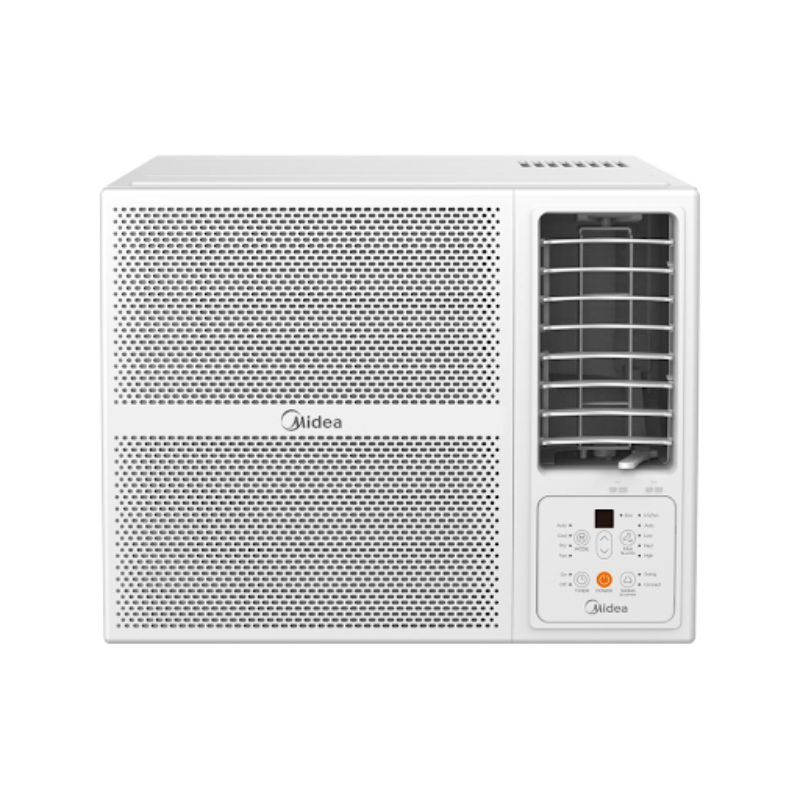
Midea Window Air Conditioner 9K MWAC-09PRO
Notable Features: Energy Saving, UV Pro Sterilizer, 9.2M Long Airflow
Category: Window
Color: White
Capacity: 9000 BTU
The sleek interior unit of your Midea wall mounted air conditioner captures all the attention, but its silent, steadfast partner is the mounting bracket. This critical component, often an afterthought, bears the entire weight of the indoor unit for years, even decades. In Singapore’s HDB flats, selecting and installing the correct bracket is a non-negotiable aspect of a safe and lasting installation.
Understanding Bracket Types and Specifications
Genuine Midea brackets are engineered to match the exact mounting points and weight distribution of their corresponding indoor units. Using a universal or non-compliant bracket risks improper support, leading to stress on the unit’s casing, abnormal vibrations, and even the terrifying possibility of the unit detaching from the wall. For specific series like the Midea mission inverter series wall mounted models, the manufacturer provides designated bracket models that ensure a perfect, secure fit. A professional installer will always source or verify the use of the correct, manufacturer-recommended bracket for your specific model.
Installation
The installation of the bracket is arguably the most crucial physical step in the entire process. It demands more than just drilling a few holes. First, the technician must use a stud finder to locate the solid, structural beams within your HDB wall—typically the reinforced concrete columns. Mounting solely onto plaster or partition material is a severe safety hazard. Once the ideal position is marked, a precision spirit level is used to ensure the bracket is perfectly horizontal. Even a slight tilt can cause improper drainage of condensation from the indoor unit, leading to potential water leakage inside your room.
The bracket is then anchored using high-tensile concrete screws or anchor bolts appropriate for your wall type. The number of anchor points matters; a robust bracket for a heavier unit, such as a Midea 1.5hp mission inverter series wall mounted model, may require four or more anchors to distribute the load safely over time, accounting for vibrations during operation.
Longevity and Corrosion Resistance
Given Singapore’s high humidity, the bracket’s material and coating are vital. Quality brackets are made from galvanised steel or aluminium with a powder-coated finish to resist rust and corrosion. This prevents weakening from the constant atmospheric moisture and the occasional condensate drip. A visible sign of poor bracket quality or improper installation is rust staining on the wall below the unit or audible creaking sounds when the unit operates.
Selecting the right installer is as critical as choosing the aircon itself. FixFirst stands as your definitive partner for a hassle-free, compliant, and expert installation.
✔️HDB Compliance Guarantee: Our technicians possess an intimate understanding of HDB’s stringent guidelines. We ensure every bracket, pipe, and wire adheres to official regulations, shielding you from potential penalties and neighbour disputes.
✔️Manufacturer-Warranty Preservation: We provide certified installation that fully meets Midea’s requirements, ensuring your valuable Midea wall mount aircon warranty remains intact and fully enforceable from day one.
✔️Precision and Craftsmanship: We treat every installation as a custom project. From accurate levelling to proper vacuum pumping and drainage slope, our attention to technical detail maximizes the efficiency and lifespan of your Midea mission inverter series wall mounted unit.
✔️Licensed and Insured Workmanship: Our team includes Licensed Electrical Workers. This offers you peace of mind, knowing the installation is not only skilled but also professionally accountable.
✔️Holistic Home Solution: Beyond aircon installation, FixFirst’s expertise in electrical, plumbing, and handyman services means we can handle any related home adjustments, from upgrading electrical switches to managing wall repairs, providing a single, responsible point of contact.

Yes, a Midea 1.5hp mission inverter series wall mounted air conditioner is generally more than adequate for a standard HDB bedroom (up to 140 sq ft). For larger master bedrooms or combined spaces, a 2HP model may be recommended.
No. You must avoid lightweight partition walls. The unit should be mounted on a main structural wall. The outdoor condenser’s location is also strictly regulated by HDB, which dictates the placement on the designated ledge.
We recommend professional servicing at least once every 12 months for optimal performance and hygiene. In Singapore’s dusty environment, cleaning the filters yourself every 4-6 weeks is also advisable.
The Midea mission inverter series wall mounted air conditioners adjust compressor speed to maintain a set temperature, avoiding the constant on/off cycling of non-inverter models. This results in quieter operation, more stable cooling, and energy savings that are sometimes up to 40% less electricity.
For standard installations on the pre-approved concrete beam, a permit is typically not required. However, for non-standard works like installing new supporting brackets, the installer will typically apply for the necessary HDB permit on your behalf.
Absolutely. Our technicians are skilled in diagnosing and repairing all major aircon brands, including Midea. Whether it’s a refrigerant leak, faulty compressor, or drainage issue, we can restore your cooling system efficiently.
Choosing and installing a Midea wall mounted air conditioner in your Singapore HDB is a major decision that influences your daily comfort, energy bills, and home compliance. From selecting the correct model like the efficient Midea 1.5hp mission inverter series wall mounted unit, to ensuring a flawless installation that honours both HDB rules and the manufacturer’s Midea wall mount aircon warranty, every detail matters. Entrust this process to professionals who combine technical expertise with a deep understanding of Singapore’s unique residential landscape.
Contact FixFirst today over Whatsapp for a transparent consultation and quotation. Let our certified technicians handle your Midea air conditioner with the precision and care your HDB flat deserves.