The Danger of a Sagging Cable
An invisible grille relies on uniform tension across every single cable. When one wire droops, the entire system weakens. An invisible grille sagging cable is a safety gap that defeats the barrier’s purpose.
The high-tensile stainless steel cables that form the grille’s core must remain taut to function correctly. A properly tensioned cable resists pressure and maintains the designed spacing between wires. When a cable sags, that spacing widens. A child or pet can push through the enlarged gap which means the grille no longer provides the fall protection it was installed to deliver.
Singapore homeowners often notice a sagging cable but dismiss it as a minor cosmetic issue. This assumption carries serious risk. An invisible grille sagging cable signals a system under stress.

Why Cables Sag in Singapore Homes
Several factors contribute to an invisible grille sagging cable in Singapore’s unique environment. Understanding these causes helps homeowners recognise problems early and schedule timely repairs.
Thermal expansion and contraction ranks as the primary culprit. Singapore’s tropical climate subjects window frames to intense heat during the day and cooler temperatures at night. This daily cycle causes metal components to expand and contract repeatedly. The cable grippers, the screws that hold each wire in place, —can loosen fractionally over time. The result is an invisible grille sagging cable that gradually loses its grip.
UV exposure accelerates the deterioration of cable coatings. Nylon or Teflon coatings protect the stainless steel core, but Singapore’s intense sun breaks down these polymers. As the coating becomes brittle and cracks, the gripper’s hold on the cable can slip. The wire loses tension, and sagging begins.
Physical impacts also play a role. Moving furniture near windows, cleaning activities, or accidental bumps can shift the cables. Even the vibration from closing windows transmits through the frame to the mounting points. Each minor displacement adds up, eventually producing an invisible grille sagging cable where none existed before.
Building settlement affects older HDB flats and condominiums. As the structure ages and settles, window frames can shift slightly. This changes the geometry that the cables were originally tensioned against. The cables that once stood firm now hang slack.
Improper initial tensioning remains a common issue. Some installers rely on guesswork rather than calibrated tension gauges. Cables that receive insufficient tension from the start will sag prematurely. Correct tensioning requires a gauge that measures the exact pull: firm enough to maintain safety, not so tight that they strain the window frame.
What a Sagging Cable Means for Safety
An invisible grille sagging cable does not exist in isolation. It affects the entire grille system in ways that many homeowners fail to appreciate.
The sagging cable creates a gap that exceeds the designed safety spacing. HDB safety standards specify that gaps in safety barriers must not exceed 100mm. When one cable sags, the spacing between that cable and its neighbours widens beyond this limit. The barrier that once prevented falls now offers a false sense of security.
The sagging cable also places additional stress on the adjacent wires. Those cables must bear more than their intended share of the load. Over time, this uneven distribution can cause neighbouring cables to sag as well. What begins as a single invisible grille sagging cable can cascade into a system-wide failure.
The frame itself suffers from uneven tension. A slack cable on one side pulls differently from a tight cable on one side pulls differently from a tight cable on the other. That imbalance places uneven stress on the window frame. A bowed frame affects the window’s sliding mechanism, making the glass panels difficult to open or close. In severe cases, the frame warps permanently and requires expensive replacement.
The safety implications extend beyond the immediate fall hazard. A sagging cable can snag clothing or skin. It can catch on objects being moved past the window. The cable itself may fray where it rubs against the frame or other hardware. A frayed cable eventually snaps under load, creating a sudden failure that could occur at the worst possible moment.
The Repair Process for a Sagging Cable
Professional repair of an invisible grille sagging cable follows a methodical approach that addresses both the symptom and the cause. The technician begins with a complete inspection of every cable and mounting point. This inspection identifies not just the sagging cable but also any other wires showing early signs of tension loss.
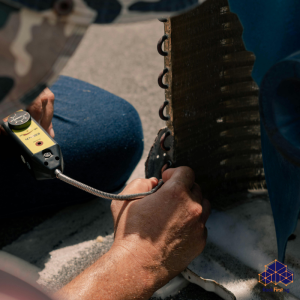
The repair itself starts with releasing the tension from the affected cable. This step requires care to avoid sudden stress changes that could warp the frame. The technician then adjusts the cable gripper, tightening the screw that holds the wire in place. Correct tensioning uses a gauge that measures the exact pull.
After adjusting the sagging cable, the technician tests the tension across the entire grille. Each cable must hold the same tension. The spacing between cables must remain consistent. The window must operate smoothly without obstruction. The entire process typically takes an hour or two, depending on the number of cables that require attention.
Some cases require more than simple re-tensioning. If the cable gripper has worn or the mounting point has shifted, the technician may need to replace hardware. If the cable itself shows signs of fraying or corrosion, replacement becomes necessary. The repair plan adapts to the specific condition of each installation.
Preventing Future Sagging
Prevention remains the best approach to invisible grille sagging cable issues. Regular inspections catch tension loss before it becomes visible. Annual checks by a professional identify subtle changes that homeowners might miss.
Quality materials make a difference. Marine-grade 316 stainless steel cables resist corrosion better than lower grades. UV-stabilized coatings protect against sun damage. Premium hardware holds tension more reliably over time. The initial investment in quality materials reduces the frequency of sagging issues.
Professional grille installation matters as much as the materials. Proper tensioning requires calibrated gauges, not guesswork. Correct anchoring prevents the frame from shifting under load. Experienced installers understand how Singapore’s climate affects cable tension and adjust their work accordingly.
Homeowners can also take simple steps to protect their grilles. Avoid hanging heavy objects on the cables. Keep furniture away from the grille area. Clean the cables gently with a soft cloth and mild soap. Report any changes in appearance or feel to a professional immediately.
When To Call a Professional
An invisible grille sagging cable demands professional attention at the first sign of trouble. Do not attempt to tighten the cable yourself. The correct tension falls within a narrow range that requires a gauge to measure. Too little tension leaves the cable slack. Too much tension strains the frame and adjacent cables.
Professional repair brings the correct tools, proper technique, and regulatory compliance. The technician inspects the entire system, not just the sagging cable. They identify underlying issues that could cause future problems.
Restore Your Grille's Safety with FixFirst
An invisible grille sagging cable signals a system under stress, a warning that demands professional attention before the situation escalates into cable failure, frame damage, or a serious safety incident. The longer you wait, the more damage that sagging cable can cause to the surrounding wires and the window frame itself.
FixFirst delivers expert invisible grille sagging cable repair across Singapore. As a BCA-certified window installer listed with HDB, FixFirst meets every regulatory requirement. The team uses proper tensioning gauges. They inspect every cable, every mounting point, and every frame condition before applying the correct tension. Contact FixFirst today over Whatsapp for professional invisible grille sagging cable repair.