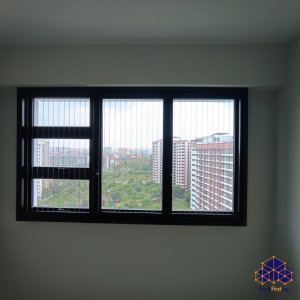
The invisible grille condo installation presents a distinct set of considerations compared to HDB flats. Private property owners enjoy greater flexibility in some areas but face additional layers of approval through their Management Corporation Strata Title (MCST). These high-tensile stainless steel wire systems offer the same safety benefits (fall protection for children and pets, preserved views, and uninterrupted airflow) but the pathway to installation differs substantially.
Condo owners must navigate both building regulations and the specific bylaws of their development. Understanding these requirements before engaging any contractor saves time, money, and the frustration of forced removals. The invisible grille condo market has grown as more families recognise the value of safety without compromising the premium aesthetics that private properties command.

MCST Approval: The First Step for Invisible Grille Condo
The Management Corporation Strata Title (MCST) governs all renovation activities in condominiums. Unlike HDB flats where homeowners deal directly with government agencies, invisible grille condo installations require approval from the building’s management council. This approval process typically takes two to four weeks to complete.
The MCST reviews renovation applications for compliance with building regulations and condo bylaws. For invisible grille condo installations, the review focuses on whether the grilles affect the building’s facade or alter the external appearance. Many MCSTs approve invisible grilles precisely because they have minimal visual impact.
Homeowners must submit a renovation application package that includes architectural floor plans, contractor details, and insurance certificates. The MCST may require specific documentation before granting approval. Approval fees for invisible grille condo installations typically range from SGD 100 to SGD 500, depending on the scope of work and the specific development.
Some MCSTs maintain approved grille designs that homeowners must follow. Others evaluate applications on a case-by-case basis. The invisible grille condo system’s near-invisible nature often works in the homeowner’s favour, as the cables are hardly noticeable from a distance.
The Legal Position: Safety Over Aesthetics
Section 37A of the Building Maintenance and Strata Management Act (BMSMA) provides important protection for condo owners seeking invisible grille condo installations. This provision states that MCSTs cannot forbid the installation of safety equipment such as window grilles or screens at a home. The law ensures that safety takes precedence over aesthetics and dismisses an MCST’s refusal for installation of safety equipment on the grounds that it adversely affects the building’s appearance.
This legal protection has been tested in practice. The Strata Titles Board has ruled that invisible grilles fall within the ambit of prescribed bylaws and have minimal impact on building appearance. Management corporations cannot prevent subsidiary proprietors from installing safety grilles at balconies to prevent harm to children, even if such grilles affect the facade.
However, this legal protection does not remove the requirement to seek approval. Homeowners must still follow the proper application process for invisible grille condo installations. The MCST clarified in one case that it was not objecting to invisible grilles per se but to the metal frames. This distinction matters because the design of the invisible grille condo system, including the frame and mounting hardware, affects the appearance of the development.
Contractor Requirements for Invisible Grille Condo
BCA-approved window contractors must carry out invisible grille condo installations. The Building and Construction Authority maintains a registry of approved contractors, and engaging an unlicensed contractor violates regulations and creates safety risks.
For the replacement or reinstatement of safety barriers integrated with windows, the law requires that the work be carried out or supervised by a trained window installer who has completed BCA’s specific module on safety barriers. This requirement exists because improper installation compromises the very safety that invisible grille condo systems are meant to provide.
Homeowners can verify a contractor’s registration through the BCA website. A competent invisible grille condo contractor demonstrates clear understanding of both technical requirements and the approval process. They should explain the distinction between frame mounting and wall mounting, specify the grade of stainless steel used, and understand the tensioning system that prevents wires from bowing over time.
Material Quality for Invisible Grille Condo
Material choice directly affects the durability and compliance of any invisible grille condo installation. Stainless steel, particularly marine-grade 316, provides excellent corrosion resistance in Singapore’s tropical climate. Marine-grade 316 stainless steel offers superior resistance to salt, moisture, and corrosion, making it ideal for Singapore’s coastal and high-humidity environment.
High-quality invisible grille condo systems use high-tensile stainless steel wires with secure anchoring systems and corrosion-resistant coatings. Some systems feature Teflon coatings that repel dirt and moisture, making maintenance easier. The cable diameter typically measures around 2mm.
Safety Spacing for Invisible Grille Condo
Safety spacing represents one of the most critical considerations for invisible grille condo installations. HDB standards specify that gaps in safety barriers must not exceed 100mm, and this standard generally applies to condominiums as well. For invisible grilles, common spacing options include 2 inches for homes with toddlers and cats, 3 inches for most families, and 4 inches for homes without small children.
The spacing directly affects both safety and cost. Tighter spacing requires more material and labour, increasing the invisible grille condo installation cost. However, the investment in proper spacing provides essential protection for young children and pets. Professional installers customise spacing based on household needs while remaining compliant with safety standards.
Cost Considerations for Invisible Grille Condo
The invisible grille condo installation cost varies based on several factors. Pricing typically follows a per-square-foot model, with rates ranging from SGD 8 to SGD 10 per square foot for standard installations. Individual windows generally cost from approximately SGD 120 per location, while full-sized balconies may exceed SGD 1,000.
Several factors influence the final invisible grille condo cost. Wire spacing affects both safety and price. For example, tighter spacing of 2 inches costs more than standard 3 to 4 inch spacing. The installation area also matters. Windows present simpler installations with lower costs, while balconies demand stronger tension systems and more complex layouts. Corner or curved layouts add further to the total.
Material quality also plays a role, with marine-grade stainless steel 316 commanding a higher price than coated alternatives. The MCST approval process may involve additional fees ranging from SGD 100 to SGD 500.
Conclusion
The invisible grille condo installation offers private property owners a practical balance of safety, aesthetics, and compliance. Understanding the MCST approval process, engaging a BCA-approved contractor, and selecting quality materials form the foundation of a successful project. The legal protections under the BMSMA provide reassurance that safety considerations take precedence over aesthetic objections, but proper application procedures remain essential.
The investment in a properly installed invisible grille condo system pays dividends in safety, peace of mind, and preserved property value. Homeowners who prioritise compliance and quality receive lasting protection without compromising their views or living experience.
FixFirst provides transparent invisible grille condo consultations with full MCST compliance assurance and professional installation by BCA-approved contractors. Contact FixFirst today for a site assessment and receive an accurate quote tailored to your condominium.