The main door of an HDB flat does two jobs at once. It keeps intruders out and holds fire back long enough for residents to escape. The metal gate in front of it adds a second layer of security and ventilation. When either stops working properly, the problem runs deeper than a door that sticks or a gate that squeaks. HDB regulations, fire safety codes, and practical repair decisions all come into play.

Why HDB Main Doors Must Be Fire-Rated
Under the Fire Safety Act and HDB’s renovation guidelines, the main entrance door of every HDB flat must be fire-rated. The minimum requirement is FD30, meaning the door resists fire for at least 30 minutes under standardised test conditions. This rating gives occupants time to evacuate before flames and smoke spread into the corridor. Replacing a fire-rated door with a non-rated one violates HDB rules and puts the entire block at risk. Homeowners who replace their main door must use a certified fire-rated model, and the replacement must comply with SCDF requirements. The door frame matters just as much as the door leaf. A fire-rated door in a compromised frame will not hold back fire for the full 30 minutes.
Common Main Door Problems in Singapore Flats
HDB flats experience the same door problems across the island. The door closer fails first. Fluid leaks from the mechanism, and the door no longer shuts on its own. HDB’s home care guide recommends replacing the door closer when fluid leaks and the door cannot self-close. Hinges loosen over time, especially the top hinge that carries the most weight. Screws back out of the wood, and the door starts to sag. The door rubs against the frame, making it difficult to close. In older flats, the wooden frame itself may have warped from years of humidity exposure. Singapore’s climate accelerates this process because wood absorbs moisture during the rainy season and dries out during hotter months, causing repeated expansion and contraction.
What Causes HDB Gate Locks to Jam
A jammed gate lock is one of the most common complaints from HDB residents. The causes are usually straightforward. The gate itself has shifted slightly out of alignment, so the lock bolt no longer lines up with the strike plate. Worn key cylinders make turning the key difficult, especially after years of daily use. Loose screws in the lock mechanism cause the entire assembly to move when the key turns. Some homeowners resort to forcing the key, which damages the cylinder further. A stuck gate lock often needs nothing more than realignment and lubrication. But if the cylinder is worn past tolerance or the internal components have corroded, replacement is the better option.
Gate Rust and What It Signals
HDB metal gates face constant exposure to rain and humidity. Surface rust appears first on the bottom rails where water collects. If left untreated, rust eats through the metal and weakens the gate structure. Orange staining on intact metal may only need cleaning and repainting. But bubbling paint, flaking coatings, or rust around hinges and welds indicate deeper corrosion that paint alone cannot fix. Rust around the lock area or hinges compromises the gate’s security. A gate with severe rust, cracked welds, or sagging should be assessed by a professional before any repainting work begins. Painting over structural corrosion hides the problem rather than solving it.
When DIY Fixes Are Safe and When They Are Not
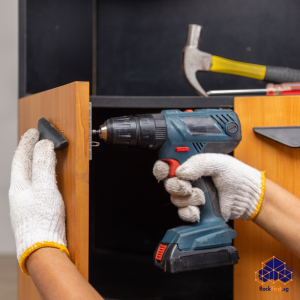
Tightening loose hinge screws, lubricating squeaky hinges, and clearing debris from the bolt hole are safe DIY tasks. HDB’s guide recommends applying lubricant to bolts that are too tight and removing dirt from bolt holes. Replacing a worn door closer is also manageable for most homeowners. But anything involving the fire-rated door’s structural integrity requires professional attention. Gaps or misalignment on a fire-rated door may affect its fire performance and should be assessed by a qualified contractor rather than adjusted by hand. Repairs to the door frame, rehanging a sagging door, or replacing a damaged gate lock mechanism fall outside safe DIY territory.
The Contractor Rule That Catches Homeowners Off Guard
HDB requires all renovation works, including those that do not need a permit, to be carried out only by HDB Registered Renovation Contractors. Homeowners who engage unregistered contractors face fines of up to S$5,000, and all unauthorised works must be removed. The engagement remains a private arrangement between homeowner and contractor, but the contractor must hold valid HDB registration. For window works, a BCA-approved contractor is required instead. Checking a contractor’s registration takes seconds through the HDB InfoWEB or by SMS to 9011 2222. Skipping this step saves nothing and risks everything.
Maintenance Habits That Prevent Costly Repairs
A few simple habits extend the life of HDB doors and gates. Oil all locks, hinges, and moving mechanisms every few months. Tighten any loose screws before they back out completely. Clear debris from gate bolt holes and door tracks. Check the door closer for fluid leaks and adjust the speed valve if the door closes too quickly. Inspect the gate for early rust signs, especially after the monsoon season. These tasks take minutes but prevent the kind of damage that requires full component replacement. A door that closes smoothly and a gate that locks without resistance are the first line of defence for everything inside your home.
A fire-rated door with a failing closer or a gate lock that jams at the wrong moment is a problem that cannot wait. FixFirst works within HDB and SCDF requirements for all door repair services. We inspect the full assembly, not just the visible fault, and explain what needs fixing before any work begins. Book a main door and gate check with a team that understands the rules as well as the repairs.