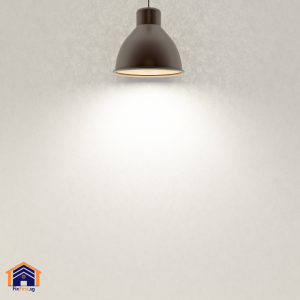
LED lighting has transformed modern interiors with its energy efficiency and versatility. But when choosing the right brightness, homeowners often ask: How bright is a 5W LED light, and where should it be used?

Understanding LED Brightness: Lumens vs. Watts
Unlike traditional incandescent bulbs, which measure brightness in watts (which is equivalent to the power consumption), LEDs use lumens (lm) to indicate light output. A 5W LED bulb typically produces 400–500 lumens, equivalent to a 40W incandescent bulb or a 9W CFL bulb. As further illustration, the following table wgives the relative brightness levels from different light sources.
Brightness Comparison Table
Light Source | Wattage | Approx. Lumens |
5W LED | 5W | 400–500 lm |
40W Incandescent | 40W | 450 lm |
9W CFL | 9W | 450 lm |
All in all, a 5W LED provides soft to moderate illumination, ideal for accent lighting, task lighting in small spaces, or ambient lighting when used in multiples.
Best Applications for a 5W LED Light
| Category | Applications |
|---|---|
| Accent and Decorative Lighting |
|
| Small Task Lighting |
|
| Ambient and Mood Lighting |
|
Optimal Placement for Maximum Efficiency
| Category | Details |
|---|---|
| Spacing for Even Illumination |
|
| Ideal Height and Positioning |
|
| Color Temperature Matters |
|

When To Avoid Using a 5W LED
❌ Large room lighting (alone) – Insufficient brightness; combine with higher-wattage LEDs.
❌ High-ceiling spaces – Light may appear too dim at greater heights.
❌ Workshops or garages – Requires brighter task lighting (10W+ LEDs recommended).
Energy Efficiency & Cost Savings in Singapore
Theoretically, a 5W LED running 5 hours/day costs just $0.26/month (if calculated at a rate of SGD 0.35/kWh). Compared to a 40W incandescent bulb, it saves SGD 1.80/month or SGD 21.60/year per bulb!
How To Compare the Brightness between LED and Fluorescent Light
To compare the brightness between LED and fluorescent light, start by examining lumens, the standard unit for measuring luminous flux (total visible light output). Both LED and fluorescent lights list lumen ratings on their packaging, allowing for a direct comparison—higher lumens indicate greater brightness. However, efficiency matters too: LEDs typically produce more lumens per watt (lm/W) than fluorescents, meaning they achieve similar brightness with less energy. For accuracy, also consider color temperature (measured in Kelvin), as cooler tones (5000K+) can appear brighter than warmer ones (2700K-3000K), even with identical lumen outputs. Additionally, beam angle affects perceived brightness; LEDs often have directional lighting, while fluorescents disperse light widely. For a precise assessment, compare fixtures under identical conditions, using a lux meter to measure illuminance (lumens per square meter) at a fixed distance. This method ensures an objective evaluation of brightness while accounting for efficiency and light distribution.
How Many Lumens To Light a Room
The number of lumens needed to light a room depends on its size and function. For general ambient lighting, aim for 20-30 lumens per square foot. A 100 sq ft living room requires 2,000-3,000 lumens, while a kitchen may need 3,000-4,000 lumens for task lighting. For how many lumens for bathroom lighting, focus on 70-80 lumens per square foot near mirrors (e.g., 4,000-5,000 lumens for a 50 sq ft bathroom). Dimmable LED fixtures allow flexibility, balancing brightness with energy efficiency. Always consider room layout, natural light, and specific tasks when planning illumination.
Final Verdict: Is a 5W LED Bright Enough?
A 5W LED (400–500 lumens) is perfect for accent, mood, and small-task lighting but may need supplementation in larger spaces. Its energy efficiency, longevity, and versatility make it an excellent choice for Singaporean homes. For expert LED lighting selection, installation, and smart lighting solutions, consult FixFirst today!